Insights · guide
How much should a Johannesburg VR activation cost?
Drafted with Insight · edited by The WE ARE VR team
development
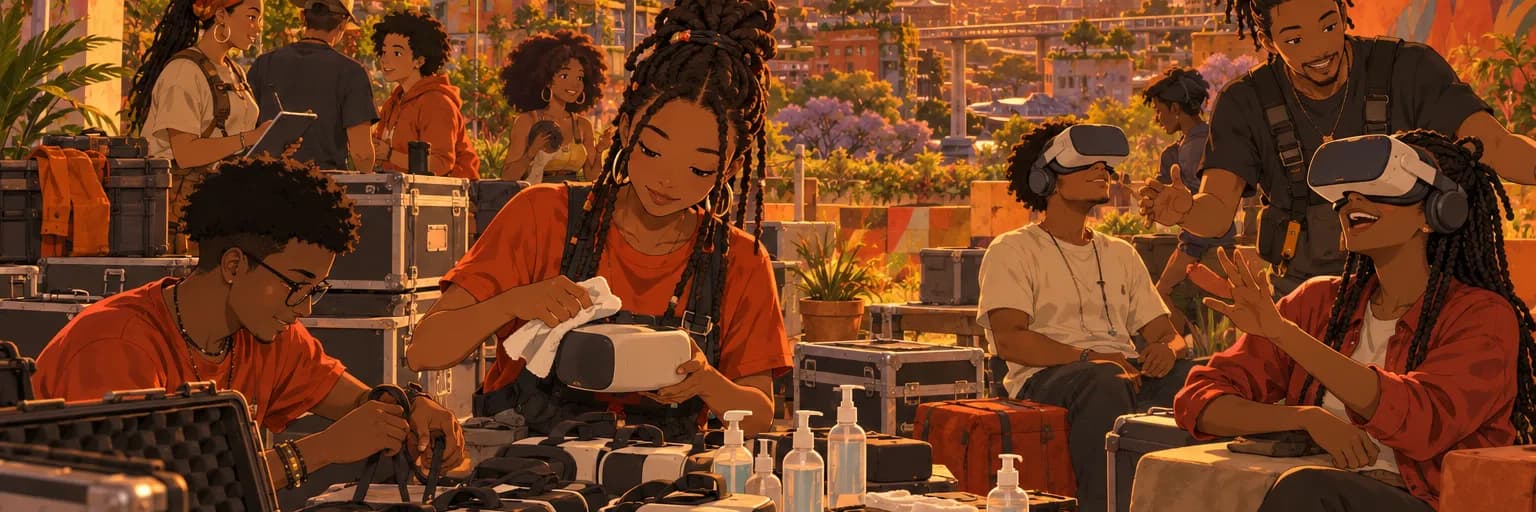
Cheap headsets do not make a cheap VR activation.
I wrote this because Jozi quotes often arrive with one seductive number: hardware hire. The expensive surprises usually sit around the headset, not inside it.
What's the problem?
A client asks for "four headsets for one day" and expects a rental quote. A supplier hears setup, testing, staff, transport, cleaning, charging, storage and the risk of damaged kit.
Both are talking about the same event, but budgeting for different jobs.
For a Johannesburg activation using finished content, I would start with a planning range of R30,000 to R60,000 for one public day and four managed headsets. That is a working allowance, not a published market tariff. Custom software, venue hire, long travel, premium displays or a multi-day run sit outside it.
The common mistake is pricing each headset, then multiplying by four. That misses the people and time required to keep four visitors moving safely.
What's the solution?
Use a one-page "activation stack" before requesting quotes. Put every cost under one of these lines:
- Hardware: headsets, controllers, chargers, spare batteries and protective cases. Add a spare headset if downtime would embarrass the client.
- Content and licensing: the VR app, event mode, user reset and any commercial licence. If content must be built, budget it separately.
- Crew: a technical lead plus enough hosts to fit headsets, explain controls and watch users. One host cannot safely run four busy stations.
- Site kit: tables, cable covers, power, Wi-Fi, headphones and screens. Screens let waiting visitors see the headset view, called spectator casting.
- Logistics: collection, delivery, parking, loading access and travel time. Sandton loading bays have ended many optimistic schedules (usually at the gate).
- Hygiene: wipeable face interfaces, manufacturer-approved equipment wipes, disposable covers and hand sanitiser. Confirm the headset maker's cleaning guidance first.
- Prep and recovery: installing builds, charging, testing, packing, setup and strike. Strike means removing the activation after the event.
- Risk: insurance, security, breakage terms and a 10% contingency. Add value-added tax if the supplier's quote excludes it.
Take a Saturday activation in Rosebank. Four headsets run finished training content for six hours. The venue supplies power and Wi-Fi. The supplier brings a spare headset, two hosts, a technical lead, casting screens and hygiene stock.
A sensible planning split might be R12,000 for hardware and site kit, R12,000 for crew and prep, R4,000 for transport and consumables, then R3,000 contingency. The working total is R31,000 before value-added tax. Change the assumptions and the total changes quickly.
The useful number is cost per completed visitor. If 120 people finish, R31,000 works out to about R258 each. That lets you compare VR with other event formats without pretending headset hire is the whole job.
What's next?
- Copy the eight lines into a spreadsheet and mark each as included, excluded or unknown.
- Estimate visitors per hour, session length and reset time. This reveals how many stations and hosts you need.
- Send the same assumptions to three Jozi suppliers. Compare exclusions before comparing totals.
Share your budget stack with the Jozi XR community, or ask us where a line item belongs.
The WE ARE VR team