Insights · guide
How to write an XR brief that freelancers can price
Drafted with Insight · edited by The WE ARE VR team
development
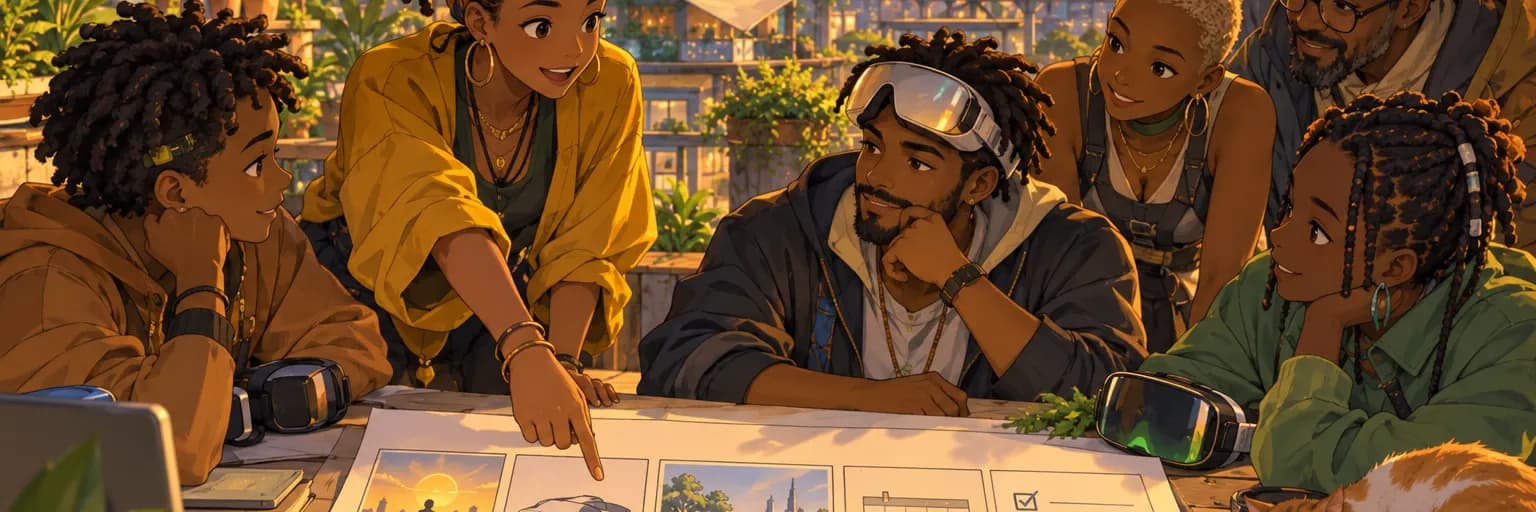
A priceable XR brief should fit on one page.
We see many promising Jozi XR ideas arrive before the practical decisions are written down. I wrote this format to help commissioners get useful quotes without preparing a giant specification.
What's the problem?
“Build us an immersive experience” is an invitation to guess.
A freelancer must estimate production time, team size, testing and hardware. If the brief leaves gaps, each supplier fills them differently. One quotes a simple prototype. Another includes polished 3D assets, ten headsets and event support.
Those prices cannot be compared fairly.
The usual response is a long email chain. Questions appear slowly, deadlines move, and hidden costs surface after approval. This is especially painful when a Johannesburg event date is fixed and the venue has limited setup time.
You do not need every technical answer before requesting a quote. You do need five decisions written in plain language.
What's the solution?
Use this one-page structure:
Outcome: Describe what should change for the audience or organisation. Avoid listing features here. “Visitors understand how illegal dumping affects the Jukskei River” is clearer than “an interactive environmental experience”.
Device: Name the hardware people will use. Write “Meta Quest 3 headset”, “Android phone”, or “visitor’s own phone”. Add quantities when hardware must be supplied.
Content: List what the freelancer must create and what you will provide. Include 3D models, video, voice-over, music, copy and translations. State whether existing brand assets are ready.
Deadline: Give the public launch date and the date for final approval. These are different. Leave time for testing, client changes and venue setup. XR rarely becomes calmer during the final week (a stubborn tradition).
Acceptance criteria: Define the checks used to approve the work. Acceptance criteria are simple, observable conditions that show the project is finished.
For example, imagine a Johannesburg museum wants a short VR installation. Its brief could say:
“Create a five-minute Quest 3 experience for ten headsets. Visitors should explore one reconstructed room and activate three narrated objects. The museum provides approved scripts and reference photographs. A test build is due 3 March, with final approval on 17 March. The experience is accepted when all three interactions work, audio can be heard clearly, and it runs for two hours without crashing.”
A freelancer can price that. They can identify missing 3D work, estimate testing time and separate headset rental from production.
Keep uncertain items visible. Write “voice actor not yet appointed” rather than hiding the gap. The quote can then include an allowance or list it as an exclusion.
What's next?
- Copy the five headings into a blank document and limit yourself to one page.
- Ask someone outside the project to underline every vague word, including “realistic”, “interactive” and “high quality”.
- Send the same brief to every freelancer, then compare their assumptions before comparing totals.
Share your one-page brief with the Jozi XR community, or ask us where it still needs detail.
The WE ARE VR team