Insights · guide
Two Eyes, One Illusion The Evolution and History of Virtual Reality
Drafted with Insight · edited by Dale P. Deacon
design · development · business
Every VR headset ever made, from a Victorian mirror box to the glowing goggles on a teenager's face in Soweto, runs on the same small, beautiful lie: fool two eyes at once, and the brain will happily build a world that isn’t there.
The trick is almost two centuries old. What changed, over and over, was everything around it. Who could afford it. How fast the picture could keep up with your head. Whether it made you feel like a god or made you throw up. This is the story of that trick: the inventors who were decades early, the hype cycles that burned out, the arcade pods and the red-screened flop, and the cheap phone parts that finally made it work.
Grab a coffee. It's a long one, and there are pictures.
Jump to: Part 1 · Before the headset · Part 2 · Labs, gloves & the first hype · Part 3 · The comeback, and what's next
The oldest trick in the headset
Put on any headset today, from a Quest to a Vision Pro, and the first thing it does to you is very old. It shows your left eye one picture and your right eye a slightly different one, and lets your brain do the rest. That trick was worked out in a London lab before the electric light bulb, before photography was even public.
Virtual reality didn't begin with computers. It began with people trying to get inside a picture.
The urge to step into the frame
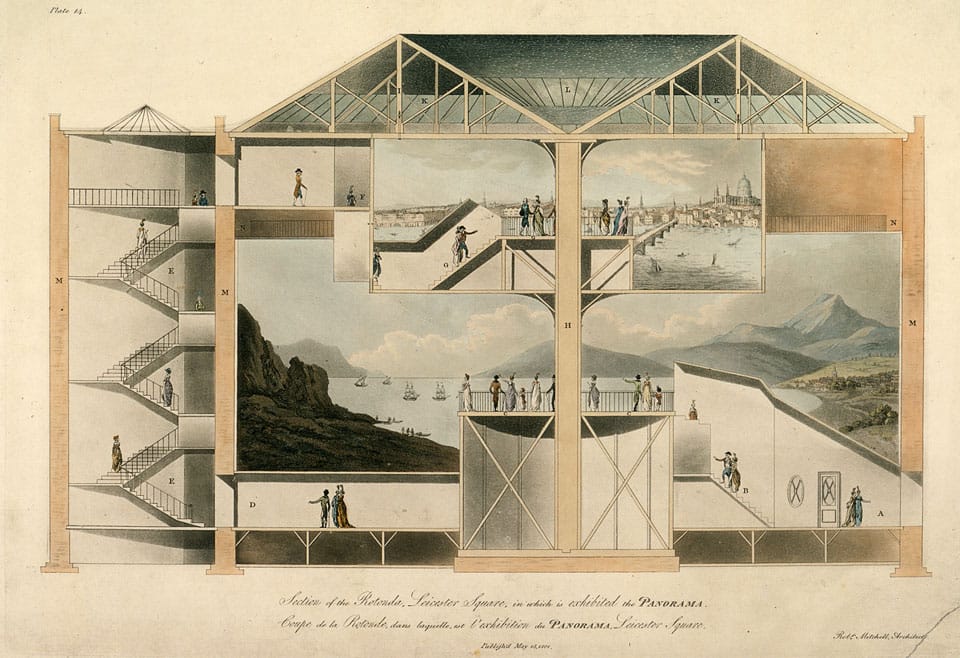
In 1787 the Irish-born painter Robert Barker patented what he called an "Apparatus for Exhibiting Pictures". The idea: paint a 360-degree scene on the inside of a cylinder, stand the audience in the middle, and hide the top and bottom edges so there is no frame to remind you it's paint. By 1793 he had a purpose-built rotunda in Leicester Square, and the word he coined for it, panorama, is still on your phone's camera app.
Barker solved one half of immersion: surround me. Nothing in front of you says "this is a picture". What he couldn't do was make the scene feel solid. A panorama is still flat. For depth, you need two eyes.

Wheatstone and the depth hack
Hold a finger up and close each eye in turn. It jumps. Your eyes sit roughly six and a half centimetres apart, so each sees the world from a slightly different spot. Near things shift a lot between the two views, far things barely at all. Your brain reads that difference, called binocular disparity, and turns it into a feeling of depth. The name for the result is stereopsis.
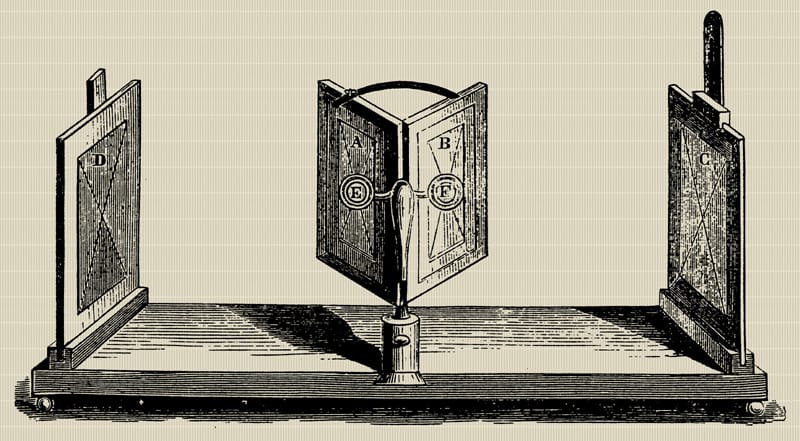
Charles Wheatstone, a physicist at King's College London, worked out that you could fake it. On 21 June 1838 he presented his paper to the Royal Society, along with a strange contraption: two mirrors set at right angles in front of your face, each angled to show one eye a separate drawing mounted off to the side. The drawings were simple line figures, each drawn from the viewpoint of one eye. Look into the mirrors and they snap together into a single object hanging in space.
That's the whole foundation. Every modern headset is a Wheatstone stereoscope with screens where the drawings were. The mirrors became lenses, the drawings became pixels, and the trick stayed the same.

A parlour craze, then a pocket one
Wheatstone's version was a bulky lab instrument. In 1849 the Scottish physicist David Brewster swapped the mirrors for a pair of lenses, giving us the compact lenticular stereoscope. Shown at the Great Exhibition of 1851, it caught Queen Victoria's eye, and the Victorians went wild. The London Stereoscopic Company, founded in 1854, sold the dream under a slogan usually quoted as "No home without a stereoscope".
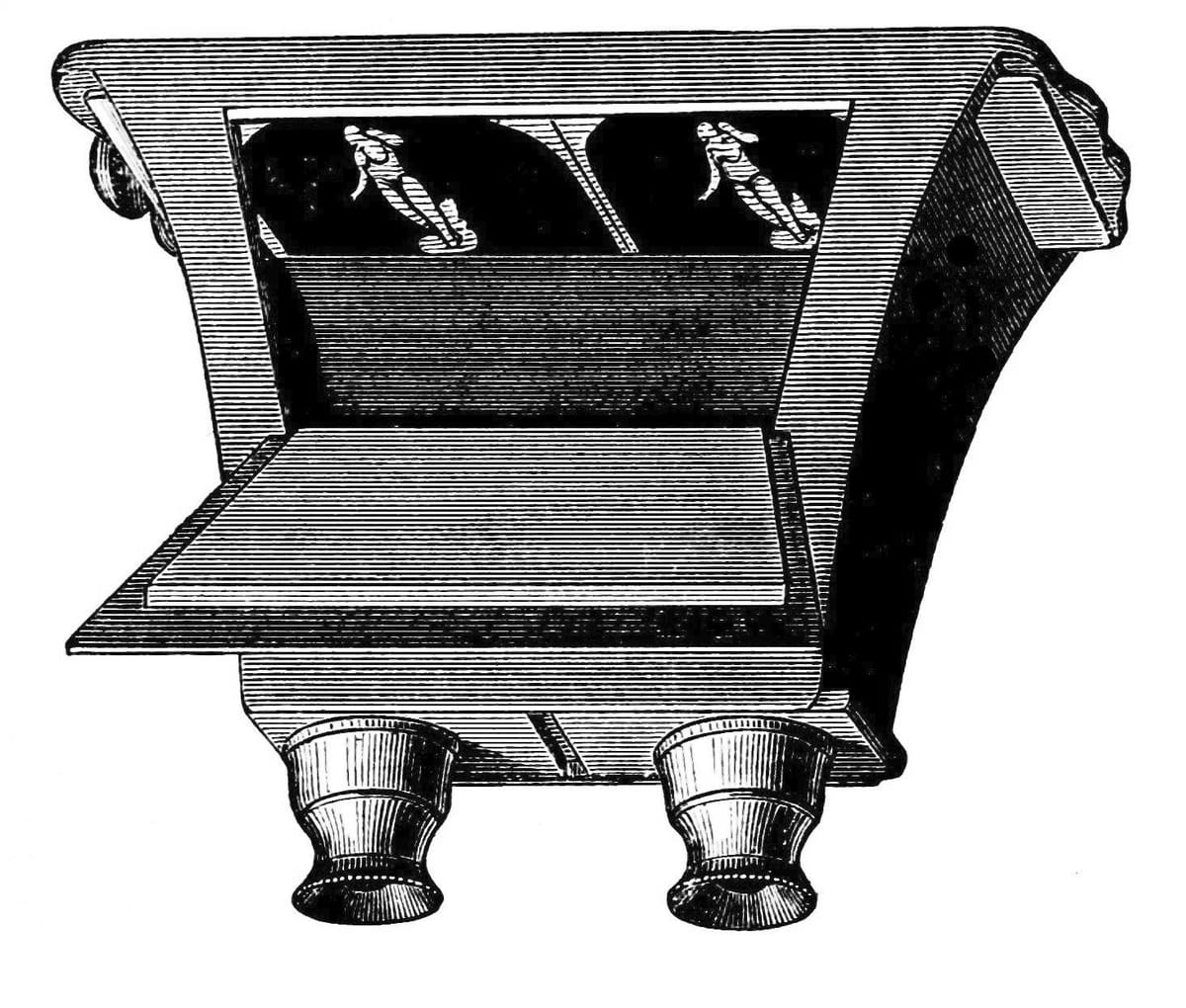

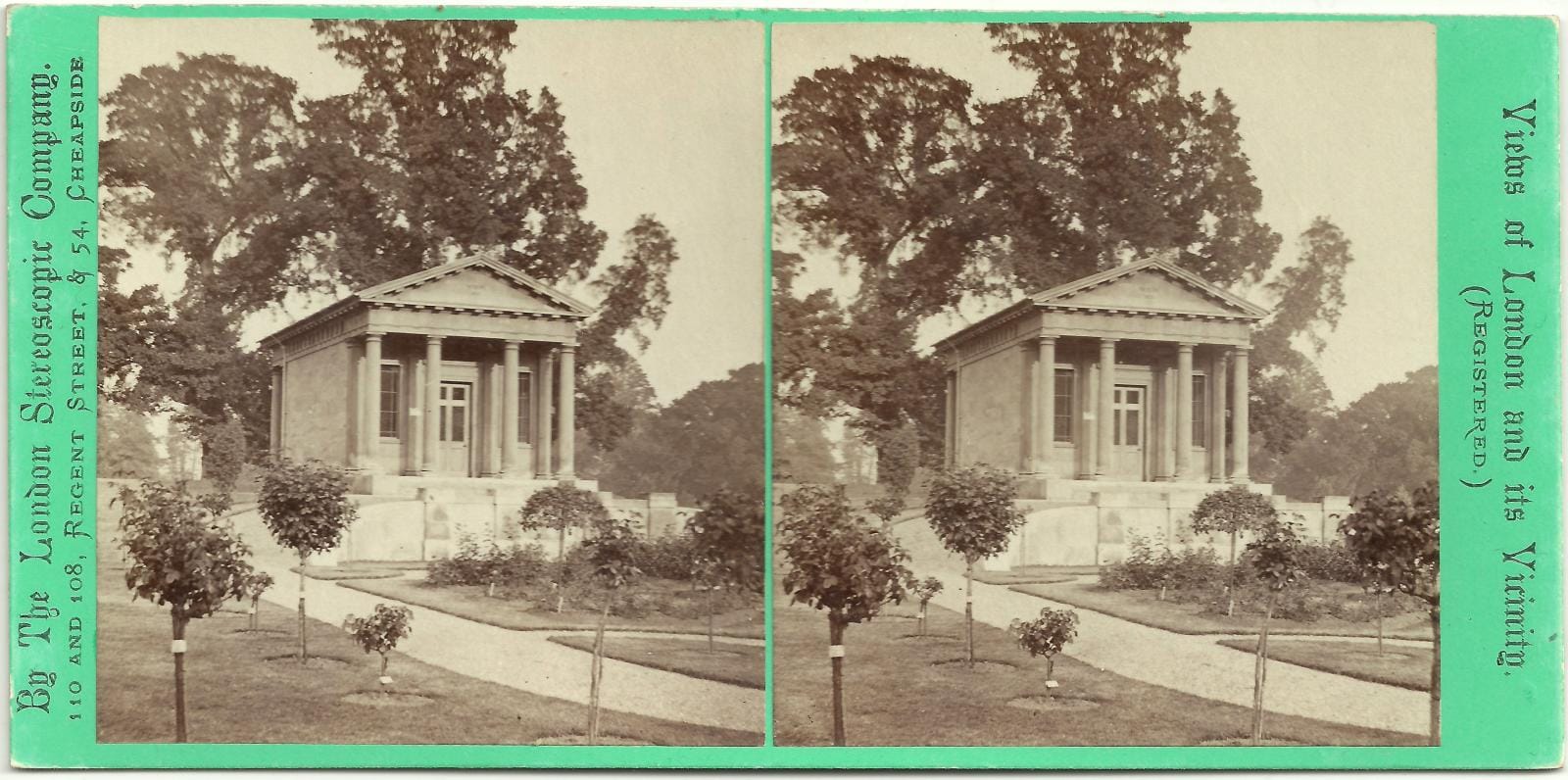

Photography then did what hand drawing couldn't: two cameras side by side, or one camera shifted a few centimetres, and you had a perfect stereo pair of a real place. Pyramids, Alpine passes, city streets, all on a card in your sitting room. In 1861 the American writer and physician Oliver Wendell Holmes designed a cheap, open hand-held viewer and deliberately didn't patent it, so anyone could make one. It became the classic stereoscope of the century.
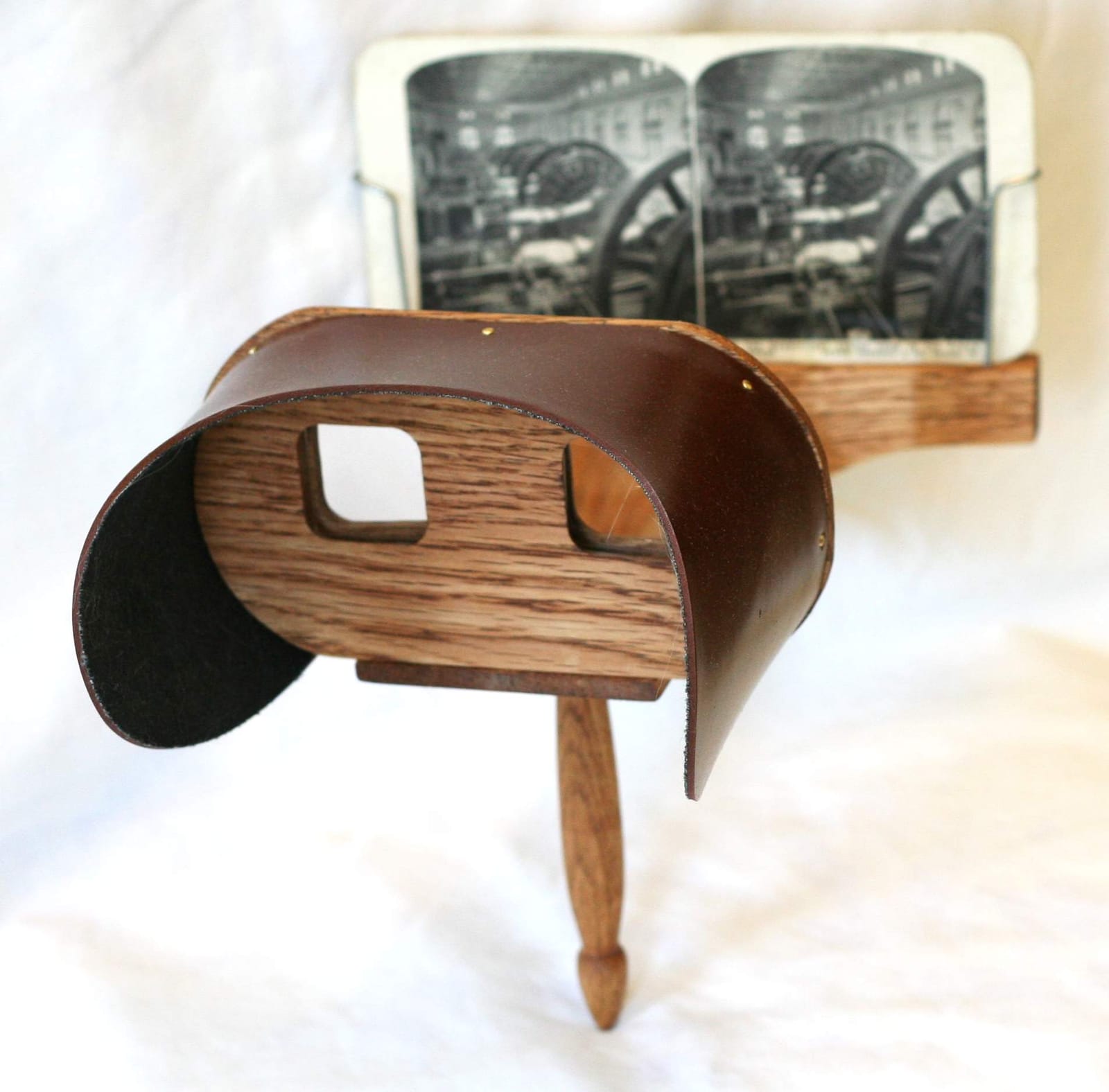

Look at what that era had already nailed: personal viewer, held to the face, a library of swappable content. That's a content platform. It's not a stretch to call it the first VR store.
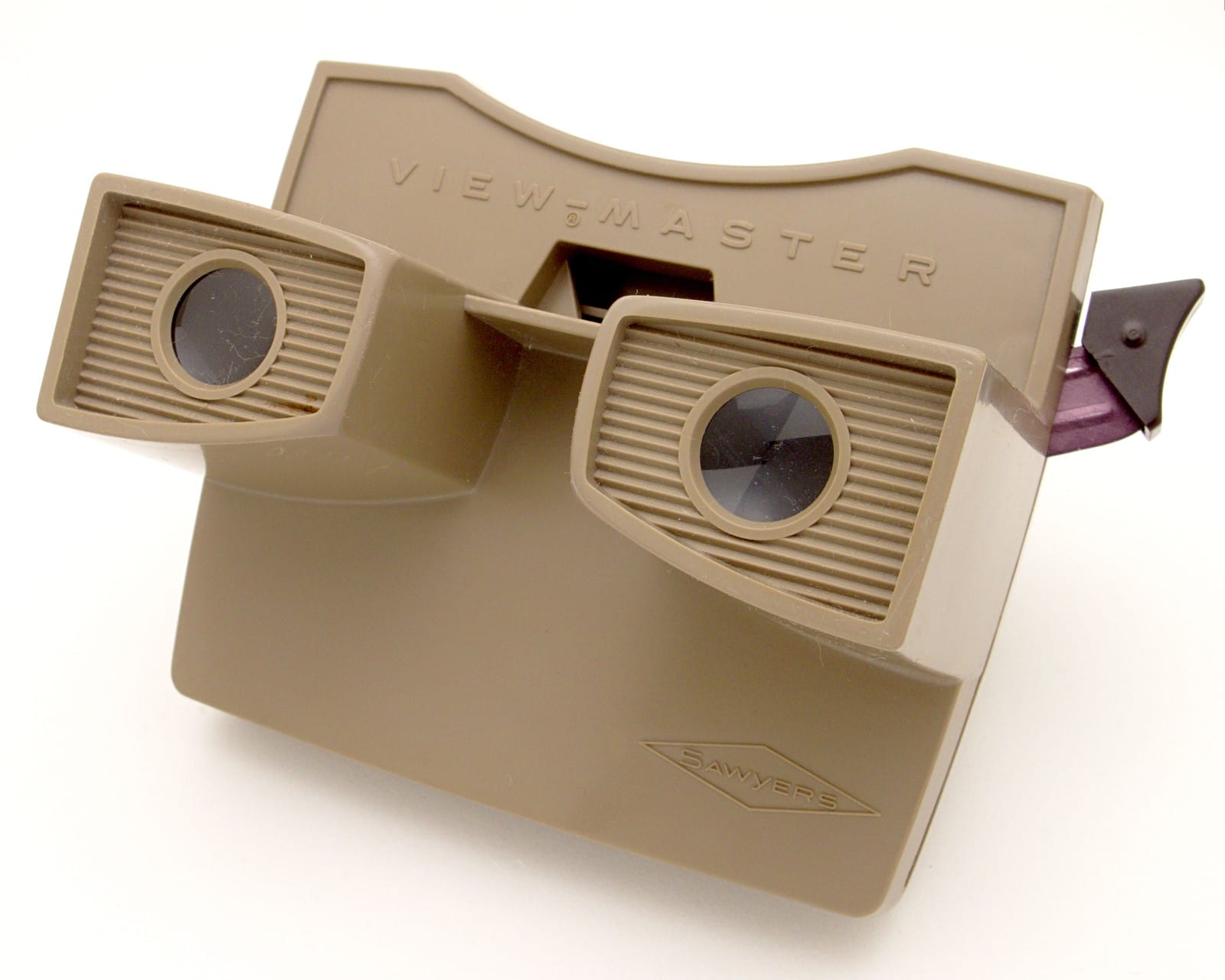
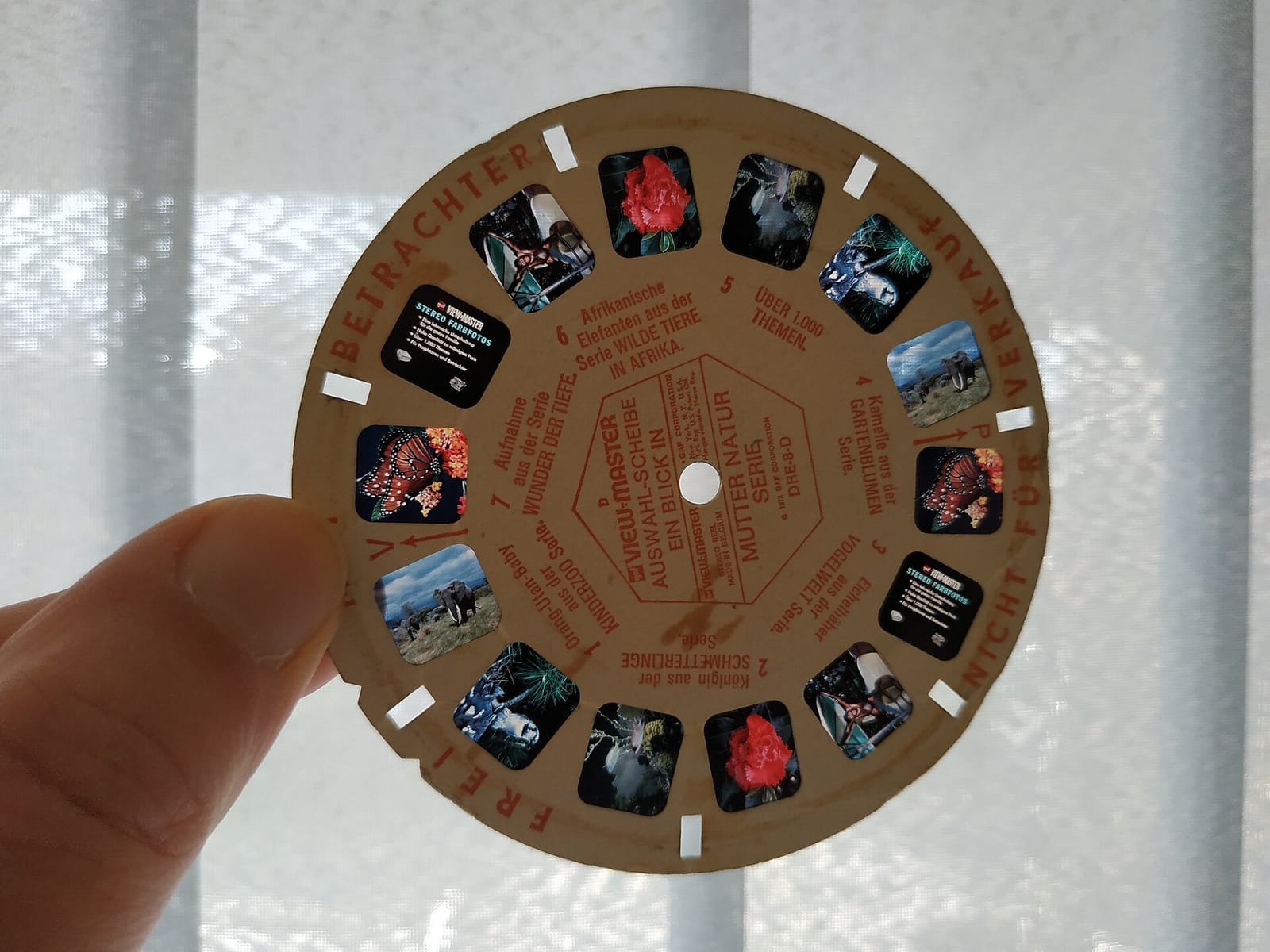
Then, in 1939, a German-born piano tuner and keen photographer called William Gruber teamed up with the Sawyer's photo company in Portland, Oregon. Their View-Master debuted at the New York World's Fair: a cardboard disc holding seven stereo pairs of tiny Kodachrome colour slides, advanced with a thumb lever.
It wasn't just a toy. From 1942 to the end of the Second World War, the US military bought around 100,000 viewers and nearly six million reels for training. Stereo viewing had become a teaching tool.


Learning to fly in a box
Stereo was one strand. The other strand was simulation: a machine that responds to you.
In 1929 Edwin Link, working in his family's organ and piano business in Binghamton, New York, built a pilot trainer from what he had to hand: organ bellows and an electric pump. Move the stick and the stubby little cockpit pitched and rolled. Nobody took it very seriously until 1934, when the US Army Air Corps took over the airmail and lost twelve pilots in 78 days, many of them in bad weather. In June 1934 the Army ordered six Link Trainers at $3,500 each.
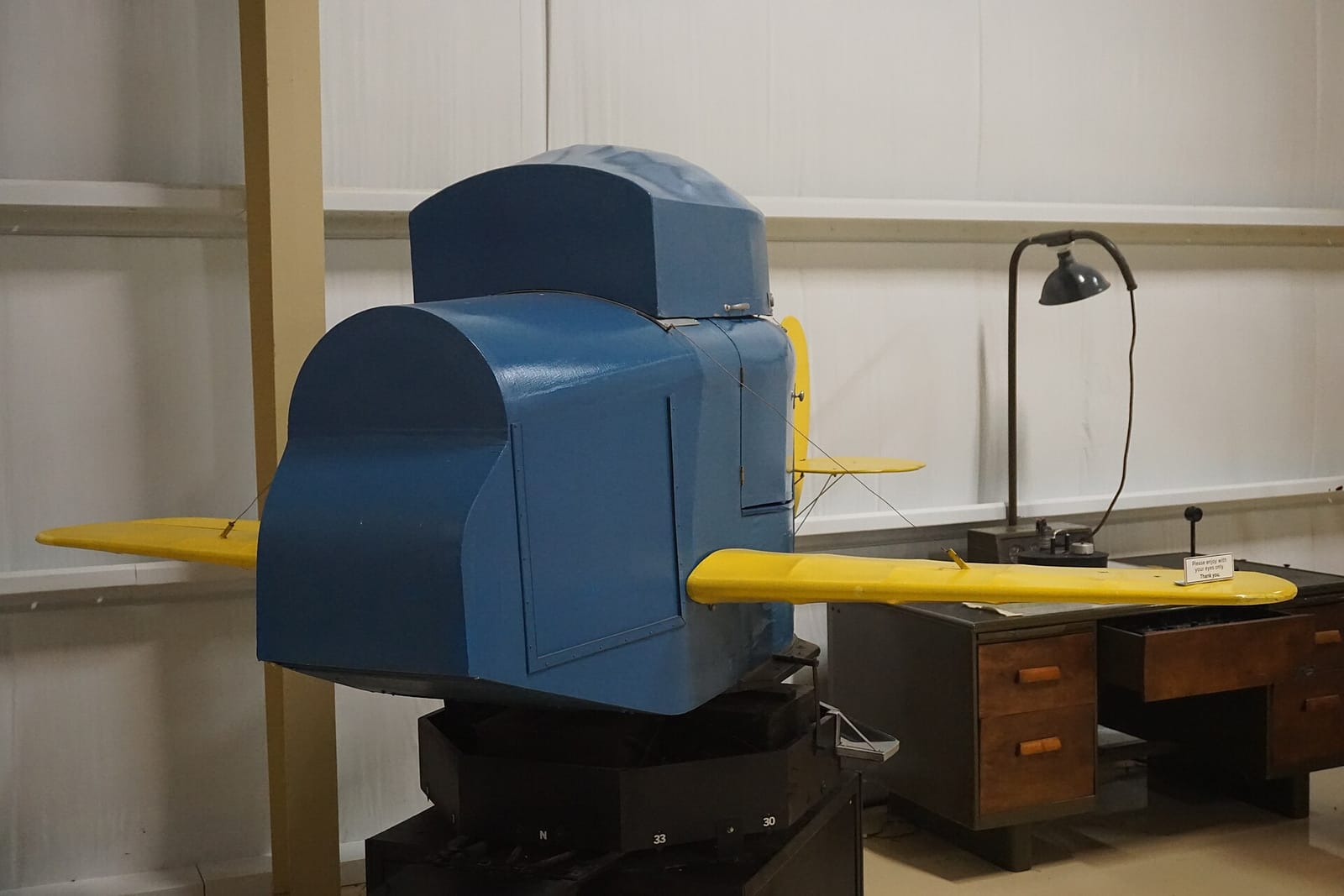

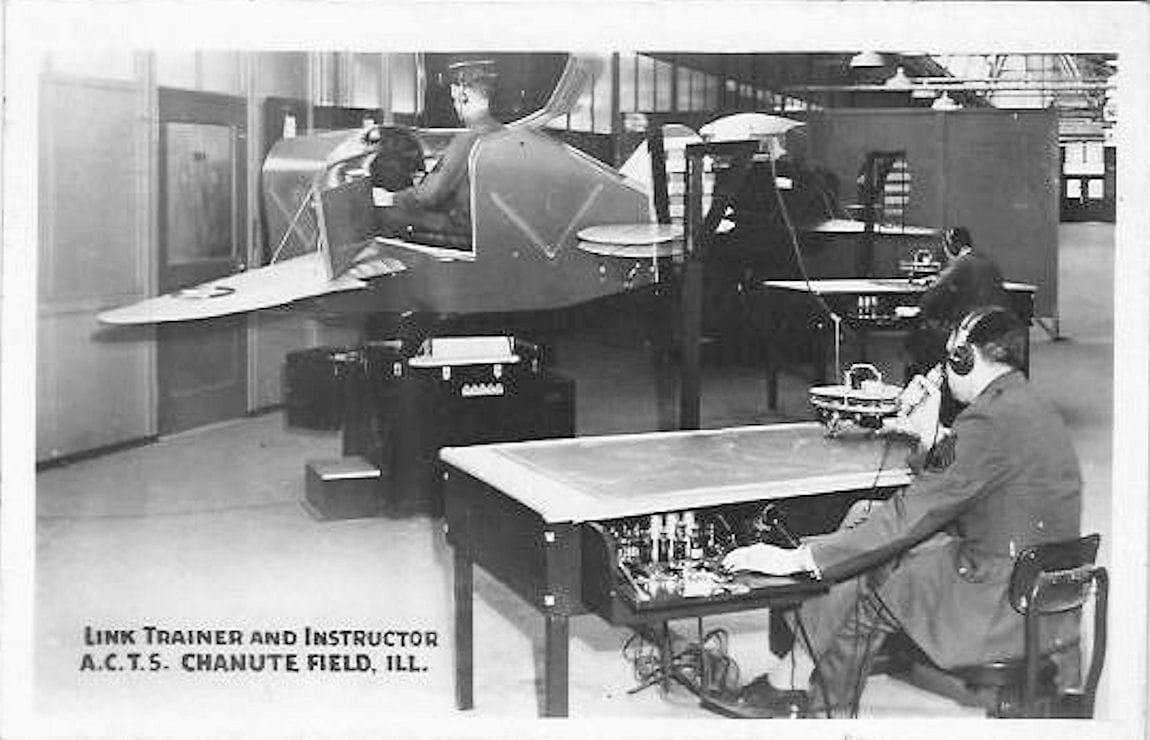

During the war Link's company built more than 10,000 of the AN-T-18 model, the "Blue Box", and over half a million American pilots learned on Link simulators. The lesson for VR is a big one. Immersion is not only what you see. It's whether the world answers back.
1935 · Pygmalion's Spectacles
Twenty-five years before anyone patented a headset, a short story described one.
Stanley G. Weinbaum was a chemical engineer from Milwaukee who turned to writing science fiction in his thirties. His first story, "A Martian Odyssey", came out in Wonder Stories in July 1934 and made his name almost overnight. He had about eighteen months left. He died of lung cancer in December 1935, aged 33.
"Pygmalion's Spectacles" ran in Wonder Stories in June 1935. A hungover Dan Burke steps out of a party into Central Park and meets Albert Ludwig, a tiny, bearded professor who says he has "made real a dream". Back in his hotel room Ludwig fills a set of goggles with a liquid and wires them up. When the liquid starts to work, the room disappears and Dan is standing in a forest. He sees it, hears it, smells it and tastes it, and his mind supplies the touch. Then he meets Galatea, who talks back.


He spends days, as it seems to him, in a paradise called Paracosma, and falls in love. Then a lens cracks and he's on a hotel-room floor at four in the morning.
“To his eyes the ground was mossy verdure; to his touch it was merely a thin hotel carpet.”
— Stanley G. Weinbaum, “Pygmalion's Spectacles”, 1935
What makes it the first real VR story is how much Weinbaum got right. The goggles are worn on the face and cover every sense. The world is filmed in stereo, "three dimensional", and Ludwig shot it with the camera "strapped on my head, to keep the viewpoint always that of the observer". You're not watching a story. You're in it, and the characters answer you. The real companies even turn Ludwig down for the same reasons people gave about headsets for decades: "Only one person can use it at a time. It's too expensive."
And the question Dan wakes up with is still the one VR asks: how much of that was real?
Morton Heilig wants all five senses
Morton Heilig was a cinematographer who thought films were only half done. In a 1955 essay, "The Cinema of the Future", he argued that film should fill your whole field of view and hit every sense, not just eyes and ears.
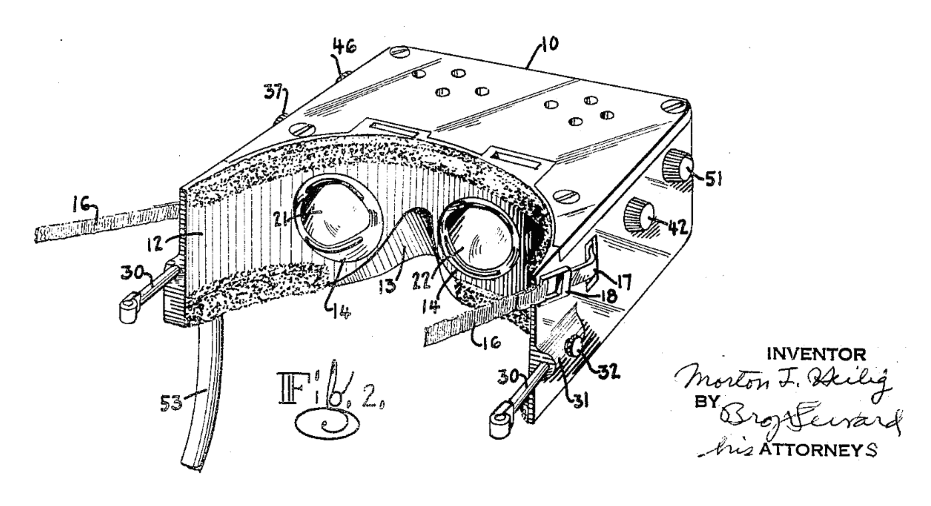
Then he patented it. US Patent 2,955,156, filed in 1957 and granted on 4 October 1960, describes a "stereoscopic-television apparatus for individual use". Read the spec and you'll recognise it instantly: a mask strapped to the face, a small TV tube for each eye, lenses that widen the image to around 140 degrees of peripheral vision, separate earphones for stereo sound, and, the part nobody has shipped since, two little nozzles at your nostrils blowing air at varying speeds and temperatures, which could be perfumed. This was the Telesphere Mask, and it looks remarkably like a modern headset. What it couldn't do was notice when you turned your head.

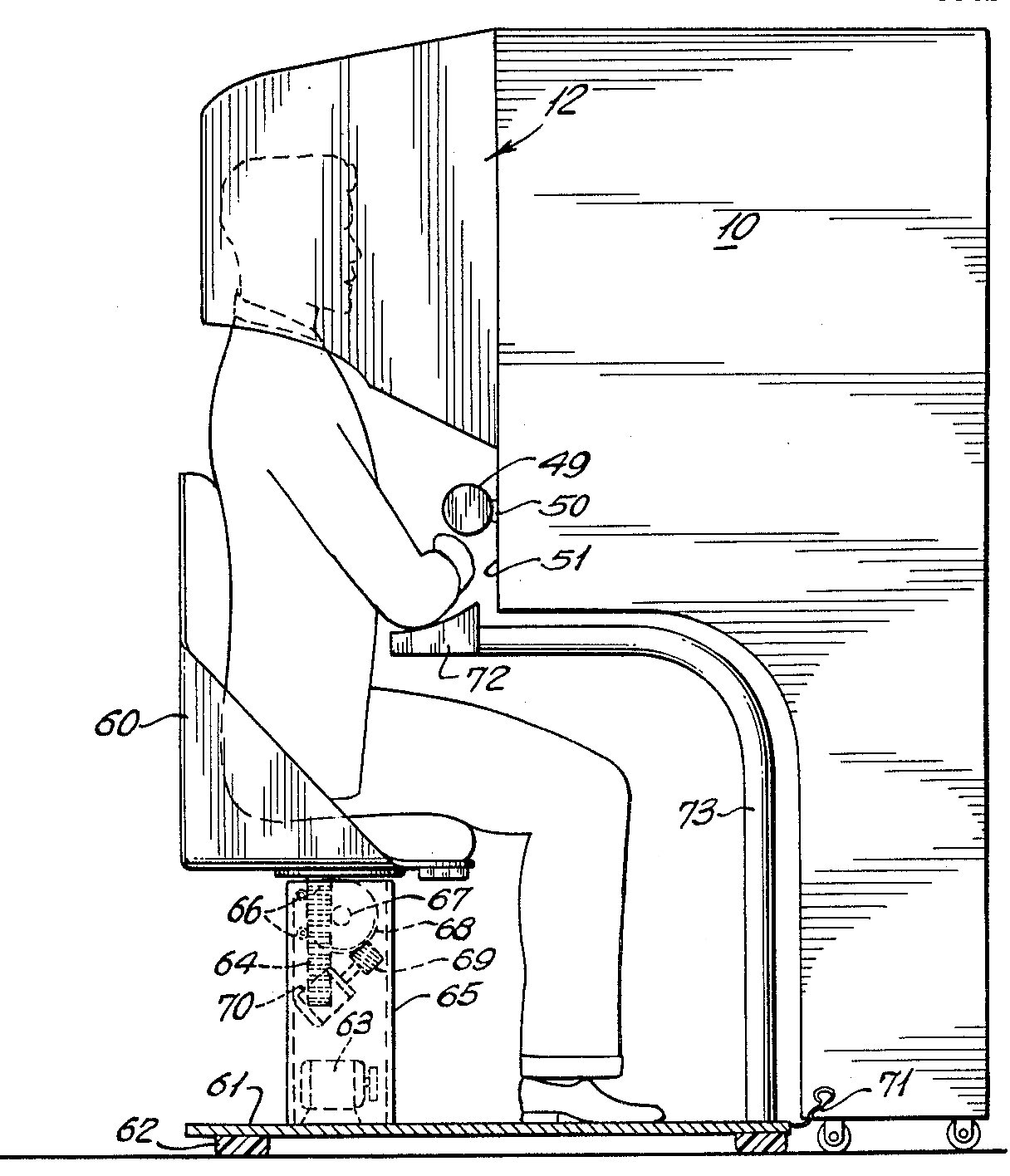
Heilig's next machine went bigger. The Sensorama Simulator was patented on 28 August 1962 (US 3,050,870): an arcade-style booth you leaned into, with a hood around your head. Inside, stereo colour film played while the machine worked on everything else.
Heilig shot short films for it, including a ride through New York streets, and synchronised the breeze, the smells and the rumble to the action. It still works today. But it was a linear film. You could feel the wind on a motorbike ride, but you couldn't steer the motorbike. Heilig couldn't find the funding to take it further, and the Sensorama became a footnote that every VR history now has to come back to.

The head starts to matter
The real breakthrough wasn't another sense. It was tracking.
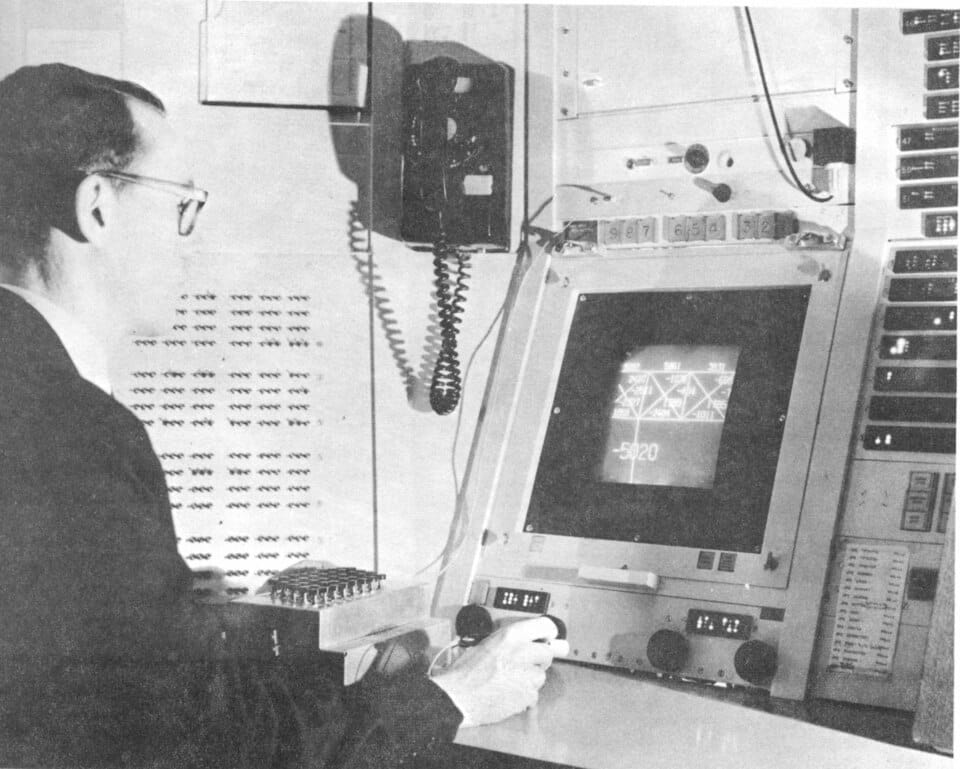
In 1961 two engineers at the Philco Corporation, Charles Comeau and James Bryan, built Headsight. It put a cathode-ray tube in a helmet and paired it with a magnetic tracking system that sensed where the wearer's head was pointing. That signal steered a camera somewhere else. Turn your head left and the remote camera turned left, so you could look around a distant room as if you were standing in it. It was built for military remote surveillance, not entertainment.
Why does that matter so much? Because it closes the loop. A stereoscope gives you depth, but the world is glued to your face. Turn your head and the scene turns with you, which is exactly what the real world never does. Tracking flips that: the view moves against your movement, so the world appears to stay put while you look around it. That single feedback loop, head moves, image updates, is what turns a picture into a place.
Headsight had the loop but pointed it at a real room through a camera. The next step was to point it at something that didn't exist.
A looking glass into a mathematical wonderland
Ivan Sutherland had already written Sketchpad, the program that more or less invented interactive computer graphics. In 1965 he published a short paper for the IFIP Congress called "The Ultimate Display". It's barely two pages and it reads like a manifesto. A computer display, he wrote, is "a looking glass into a mathematical wonderland." Then he went further.
“The ultimate display would, of course, be a room within which the computer can control the existence of matter.”
— Ivan Sutherland, “The Ultimate Display”, 1965
He ended on Lewis Carroll: with the right programming, such a display "could literally be the Wonderland into which Alice walked." That's still the north star of the whole industry.
Three years later he built a first step towards it. Working at Harvard with his student Bob Sproull, Sutherland put together a head-mounted display that showed computer-generated images instead of camera footage. Small CRTs beside the head fed optics with half-silvered mirrors, so the wireframe graphics floated over the real room. That makes it an ancestor of augmented reality as much as VR.
The headset was so heavy that it had to hang from a mechanical arm bolted to the ceiling. That arm doubled as the tracker: its joints measured where your head was and which way it faced, and the computer redrew the scene from your new point of view. The looming contraption was jokingly nicknamed "The Sword of Damocles", after the Greek tale of a sword hung by a single hair above a courtier's head.
The graphics were primitive, just glowing wireframe lines with no colour or texture, and the first scene was a cube. But look at what was finally in one place: stereo images for two eyes (Wheatstone), a display on the head (Heilig), head tracking (Headsight), and a world made entirely of maths (Sutherland). Every ingredient of modern VR, in one room, in 1968.
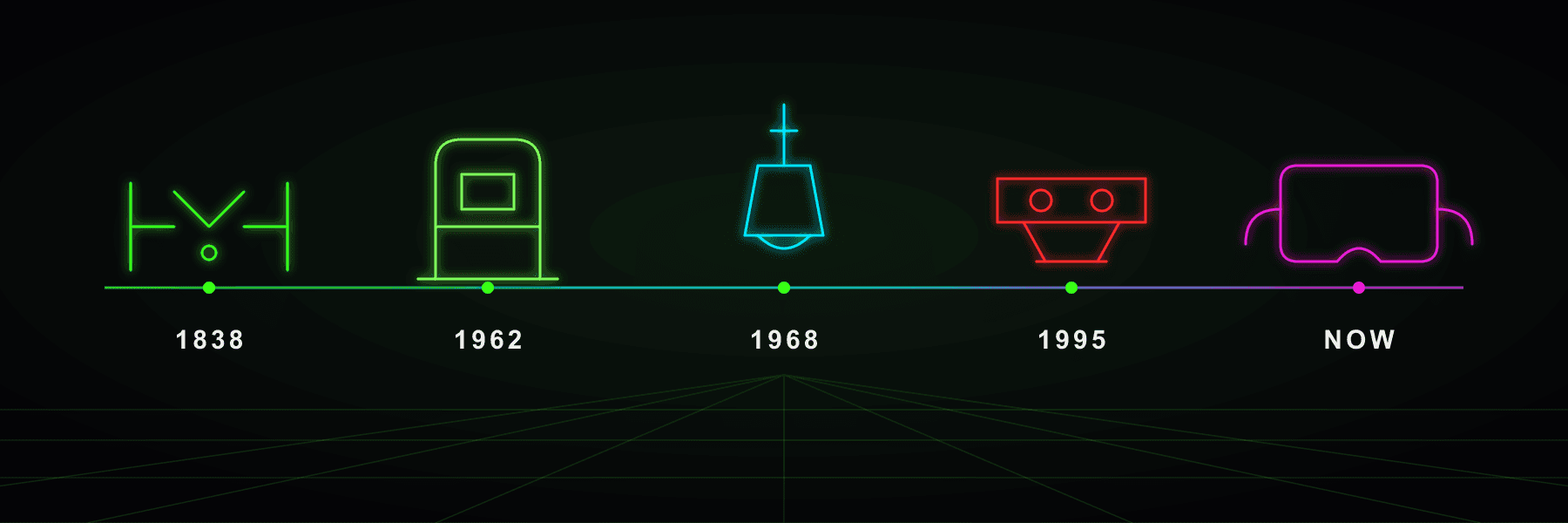
- Barker's panorama
A 360-degree painting viewed from inside a cylinder. Immersion by surrounding the viewer.
- Wheatstone's stereoscope
Two mirrors, two drawings, one solid image. Binocular disparity, faked for the first time.
- Brewster's lens stereoscope
Lenses replace mirrors and the viewer shrinks to hand size.
- Holmes stereoscope
A cheap, open, unpatented design that put 3D in parlours everywhere.
- Link Trainer
Organ bellows make a cockpit that responds to the pilot. Simulation is born.
- View-Master
Seven stereo pairs on a disc, launched at the New York World's Fair.
- Telesphere Mask patent
Heilig patents a face-worn stereo TV with stereo sound and scented air.
- Philco Headsight
The first head-mounted display with motion tracking, steering a remote camera.
- Sensorama patent
Stereo film plus wind, smell and vibration in one booth.
- “The Ultimate Display”
Sutherland imagines a room where the computer controls matter itself.
- The Sword of Damocles
Sutherland and Sproull's head-tracked HMD shows computer graphics for the first time.
It was heavy, it was tethered to the ceiling and only a handful of people ever wore it. Getting it out of the lab and into gloves, arcades and living rooms would take the next twenty-five years.
Shadows on the wall, wires up the fingers
By 1970 the idea was out of the box. Ivan Sutherland had shown that a computer could hang a picture in mid-air and keep it there as you turned your head. What nobody yet knew was what you were supposed to do in there.
The next forty years answered that question the hard way: in art galleries, flight simulators, NASA labs, garage start-ups and, briefly and disastrously, in the toy aisle. Almost every lesson modern headsets live by was learned in this era, usually by getting it wrong first.
Myron Krueger and the body as the controller
Myron Krueger did not want you to wear anything. A computer artist working out of the University of Wisconsin, he built rooms that watched you. GLOWFLOW (1969, with Dan Sandin, Jerry Erdman and Richard Venezky) was a light-and-sound environment that responded to the people inside it. METAPLAY followed, then PSYCHIC SPACE (1971), which used a sensing floor to follow visitors' footsteps.
His masterpiece was VIDEOPLACE. A camera captured your silhouette, the computer composited it onto a projected scene, and your shadow-self could touch, poke and play with graphics, or with the silhouette of someone in another room. In 1975 it ran as a two-way exhibit at the Milwaukee Art Museum.
Krueger called the field "artificial reality", and his 1983 book used it as a title. No goggles, no gloves, full-body interaction from a camera. If that sounds like the Kinect, or the hand tracking in your Quest, that is because it is the same idea, forty years early.
A map you could drive, a cockpit you could wear
In 1978 MIT's Architecture Machine Group, funded by ARPA, built the Aspen Movie Map. Four 16mm cameras on a car fired every ten feet as it drove every street in Aspen, Colorado. The footage went onto laserdisc, linked to a street map, so you could "drive" anywhere you liked, in summer, winter or a polygon mode. The project was led by Andrew Lippman, with cinematography by Michael Naimark. The military motivation was blunt: after the 1976 Entebbe raid, where commandos rehearsed on a mock-up of the airport, the Pentagon wanted a cheap way of familiarising soldiers with new territory. You know its grandchild as Street View.
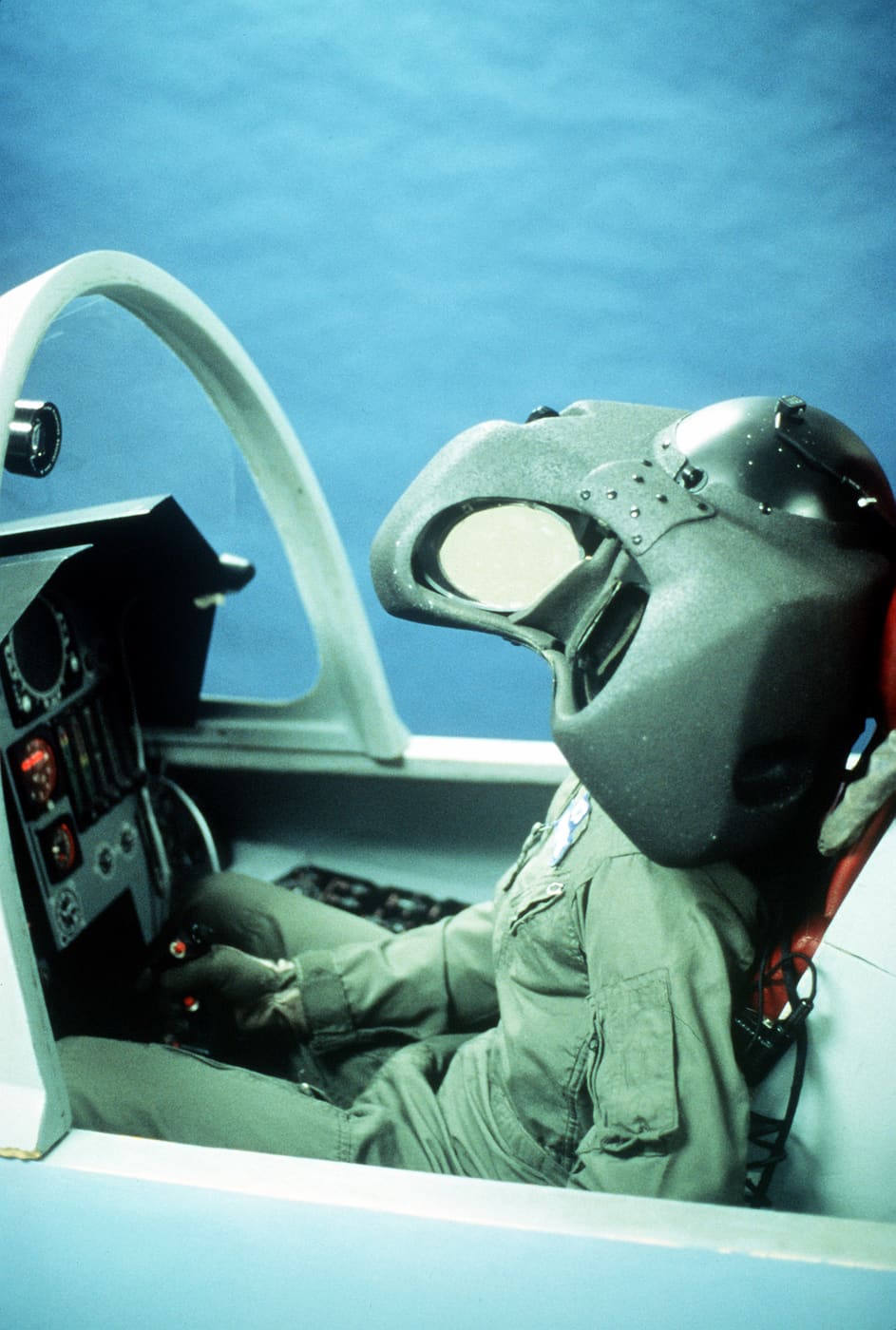
The air force wanted something stronger. At Wright-Patterson Air Force Base, Tom Furness had been working on helmet displays since the late 1960s. His Visually Coupled Airborne Systems Simulator (VCASS) was demonstrated in 1982: pilots wore a huge helmet, nicknamed the Darth Vader, and saw a simplified, symbolic world of terrain, targets and threats, tracked to their head with a Polhemus magnetic sensor. It grew into the Super Cockpit programme from 1986. Furness's lesson was that VR did not have to be photoreal to be useful. It had to be readable, fast and tied to where you were looking. In 1989 he left to found the Human Interface Technology Lab (HIT Lab) at the University of Washington, and he is still often called the grandfather of VR.

NASA does it on a budget
Military helmets cost millions. At NASA Ames, Michael McGreevy started the VIVED project in 1984 to prove you could build a head-mounted display from off-the-shelf parts: small monochrome LCDs, a Polhemus tracker, and wide-angle LEEP optics. LEEP was Eric Howlett's 1979 lens system, designed for stereo photography, and it gave a huge field of view from a tiny screen.
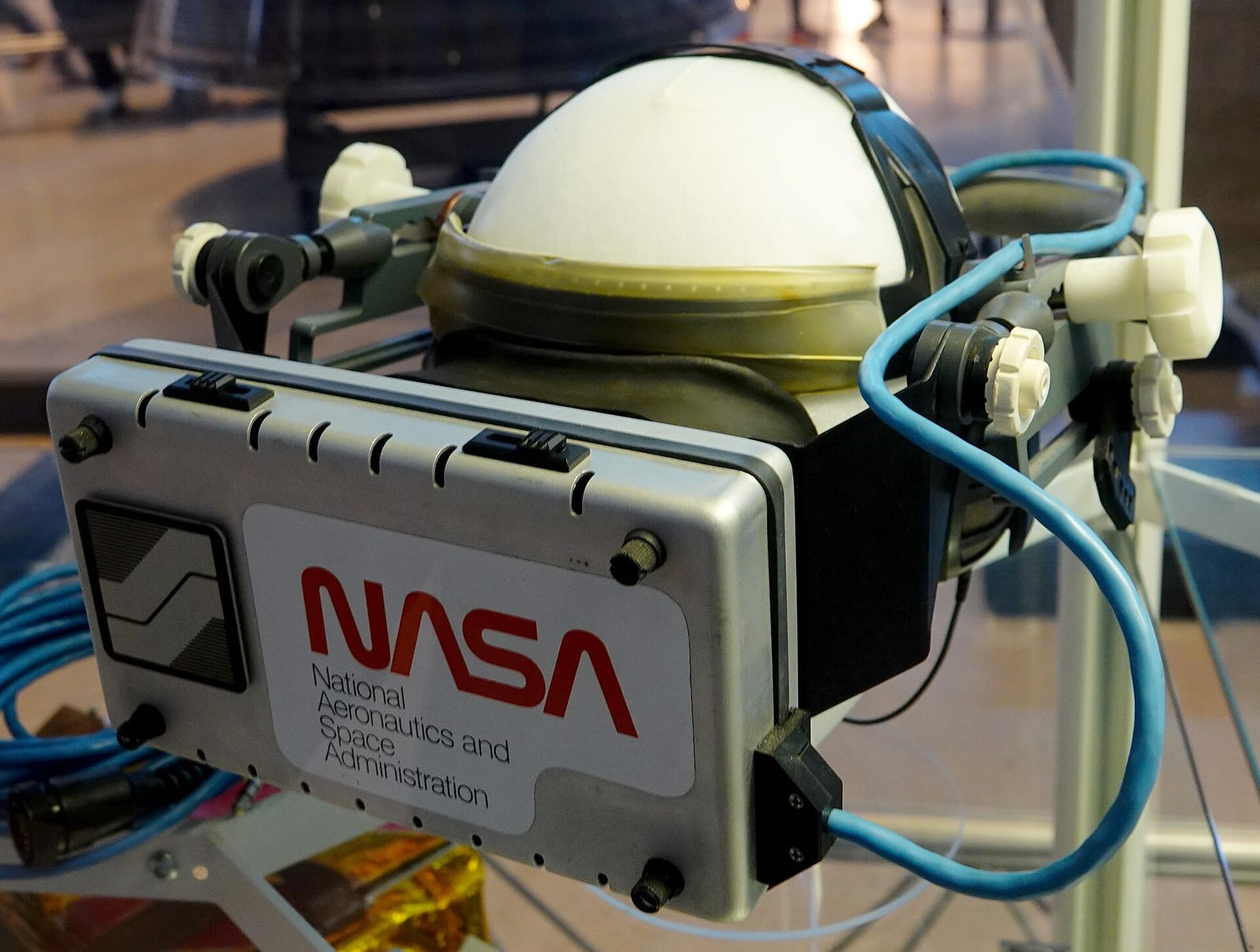

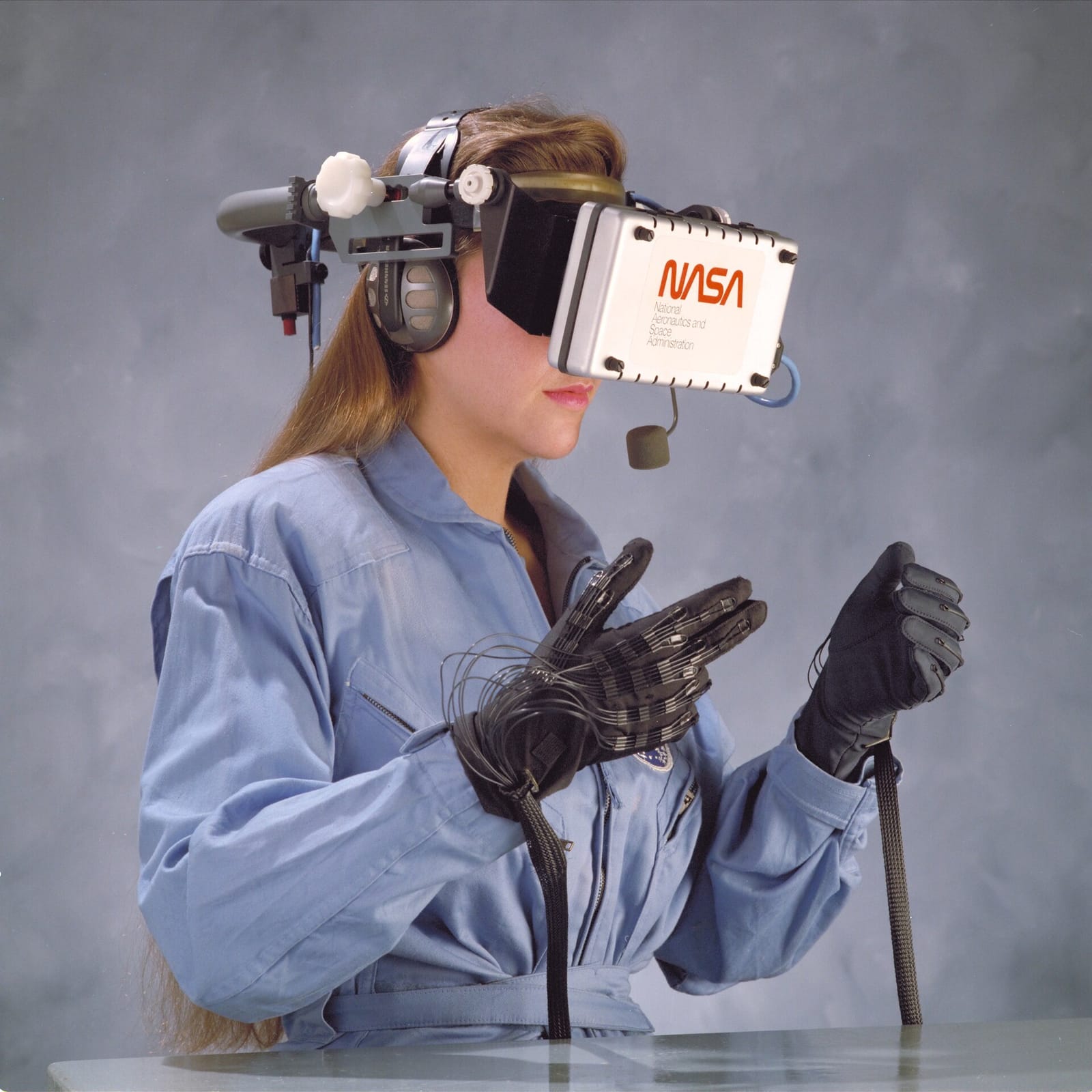
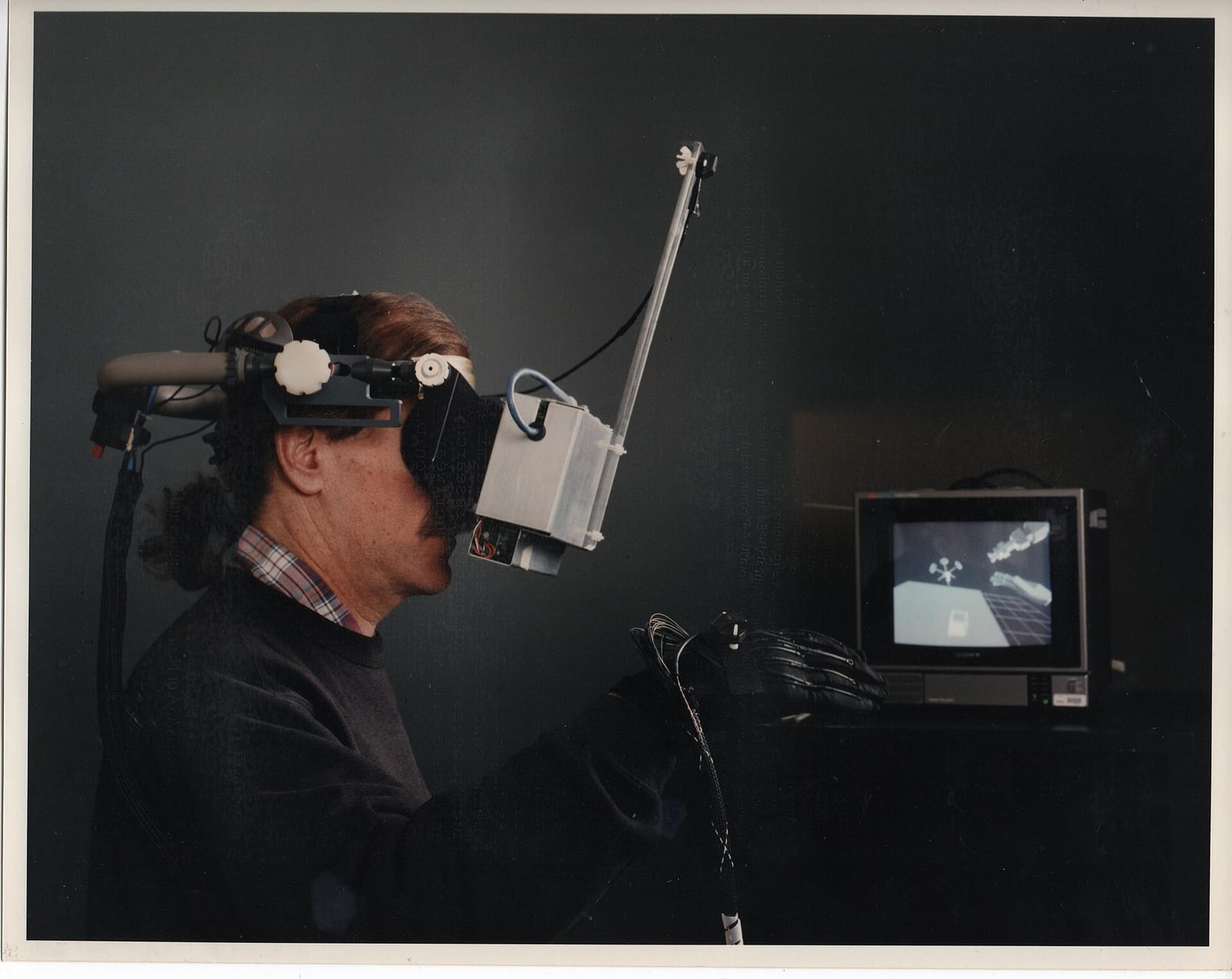
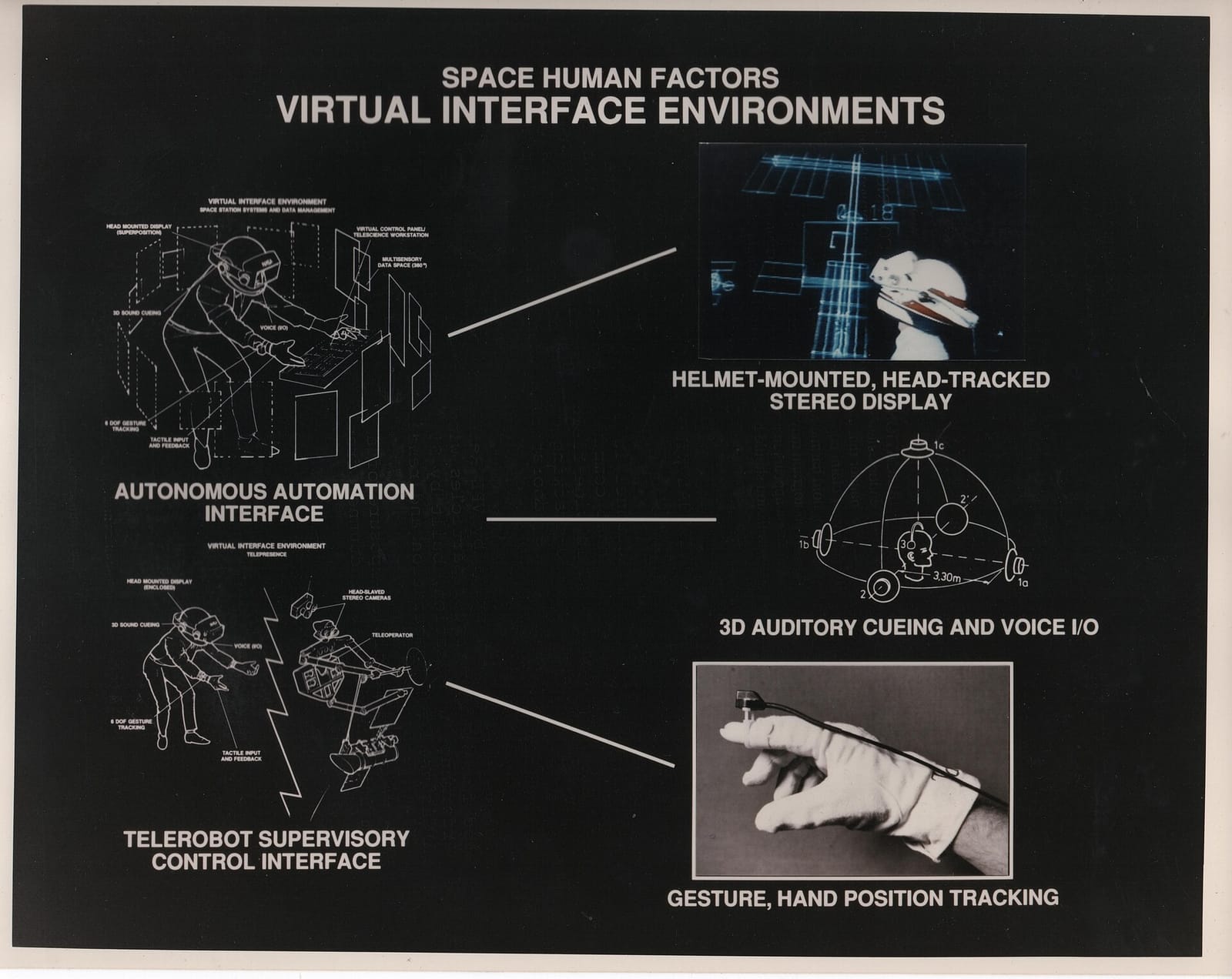
Scott Fisher, arriving from Atari, led the follow-on VIEW (Virtual Interface Environment Workstation) from 1985. VIEW added glove input and 3D sound via the Convolvotron, built with Scott Foster of Crystal River Engineering. Those photos of a NASA researcher in a black visor and a wired glove that every 90s magazine reprinted? That is VIEW. It established the template: head tracking, stereo optics, hands, spatial audio.



VPL gives the dream a name and a price tag
Jaron Lanier was a dreadlocked programmer who had made a hit video game, Moondust. Thomas Zimmerman had built an optical glove that measured how far your fingers bent. Together they started VPL Research in 1984 (some sources say 1985), and by the late 1980s Lanier had popularised the phrase that stuck: virtual reality.


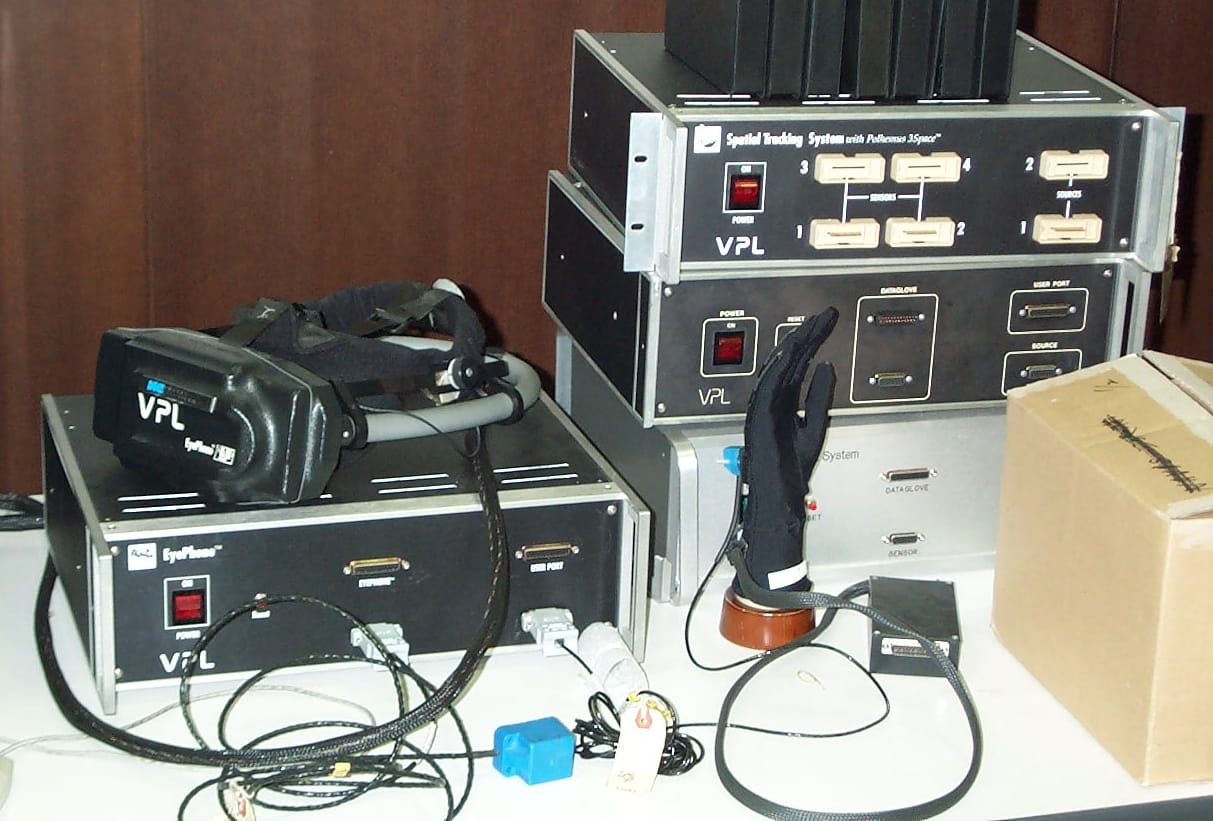

VPL sold the whole kit. The DataGlove ran loops of optical fibre along each finger; bend a knuckle and less light reached the sensor at the end. The EyePhone was the head-mounted display. The DataSuit wired up arms, legs and torso. A complete system, with the computers to drive it, cost upwards of $250,000.
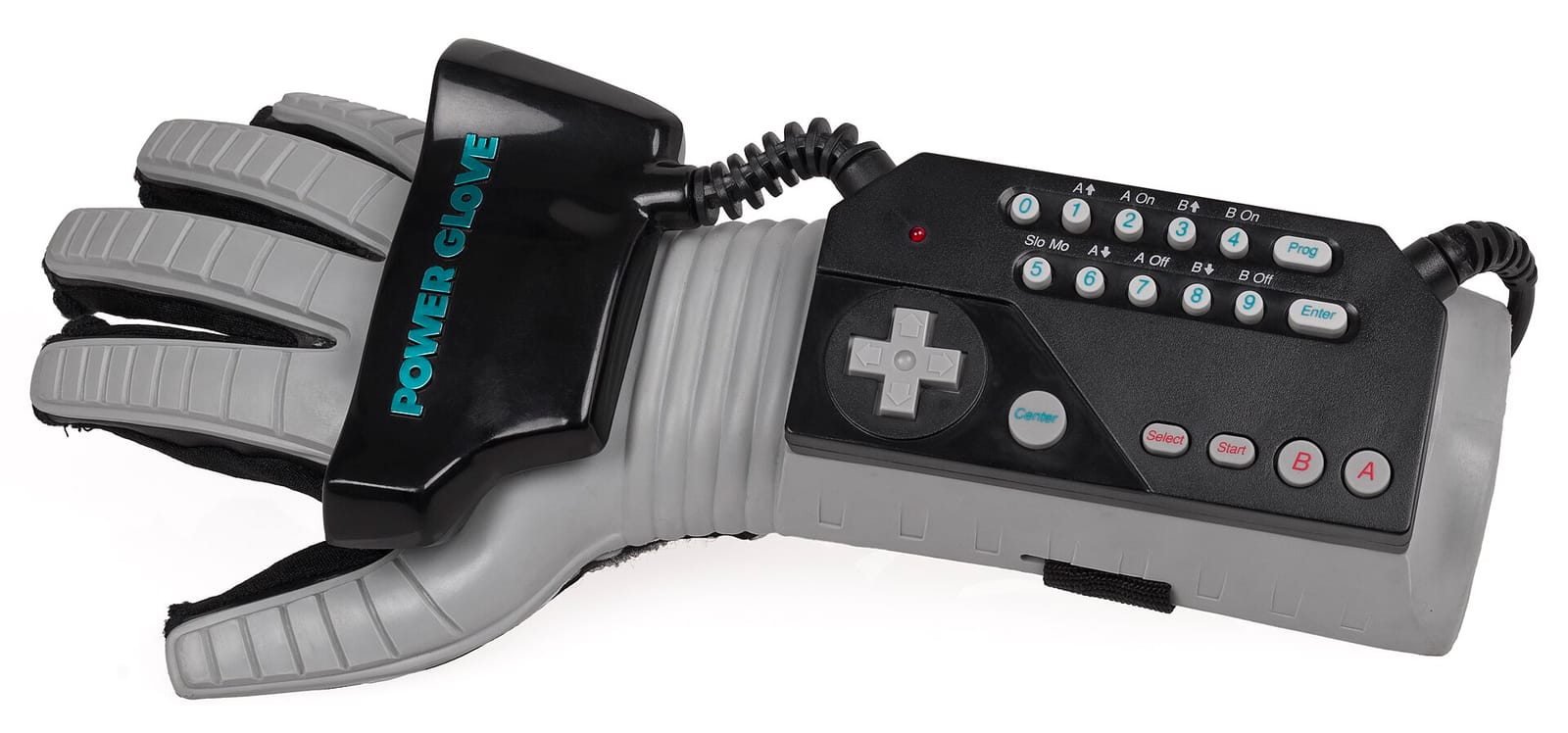
Then the glove went to the toy shop. VPL licensed the technology to Mattel, and in October 1989 the Power Glove hit shelves for the NES. The pricey fibre optics were swapped for cheap conductive-ink flex sensors, good for about two bits per finger, and ultrasonic speakers on the TV tracked your hand. Nearly a million sold, and it was famously hard to use. It was also the first time ordinary kids put their hands into a computer.

VPL itself burned bright and short, filing for bankruptcy in 1990. Sun Microsystems bought its patents in 1998.
- GLOWFLOW
Krueger and collaborators build a light-and-sound room that responds to the people inside it.
- Aspen Movie Map
MIT puts a whole town on laserdisc, filmed every ten feet. Proto Street View.
- VCASS
Tom Furness demonstrates a head-tracked "Darth Vader" helmet for fighter pilots.
- VIVED & VPL
NASA Ames builds a cheap HMD from LCDs and LEEP optics; Lanier and Zimmerman start VPL Research.
- NASA VIEW
Scott Fisher's lab adds gloves and 3D audio. The iconic visor-and-glove photo is born.
- Power Glove
Mattel brings VPL-licensed glove tech to the NES. Nearly a million sold.
The culture gets there first
Fiction ran ahead of the hardware the whole way. William Gibson coined "cyberspace" in his 1982 story "Burning Chrome", then made it famous two years later.
“Cyberspace. A consensual hallucination experienced daily by billions of legitimate operators, in every nation…”
— William Gibson, Neuromancer, 1984
In 1992 Neal Stephenson's Snow Crash gave us the Metaverse, a single shared virtual street that everyone jacked into, and the same year The Lawnmower Man put VR on cinema screens as glossy, dangerous, mind-expanding magic. Magazines, music videos and talk shows piled in. The public was promised the Matrix. What it was about to get was a red-and-black headache.
Pods, promises and a very red console
Virtuality: VR in the arcade
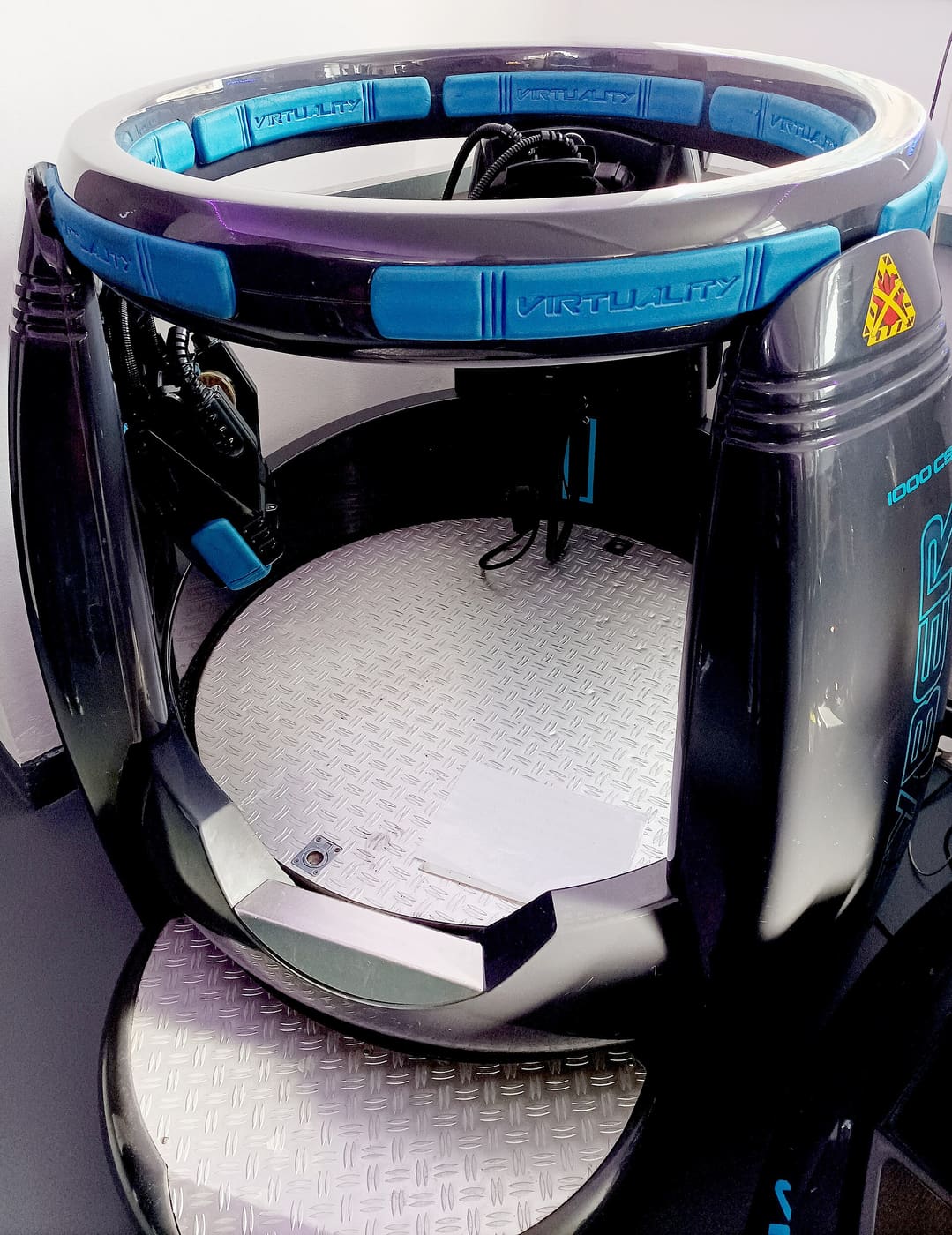
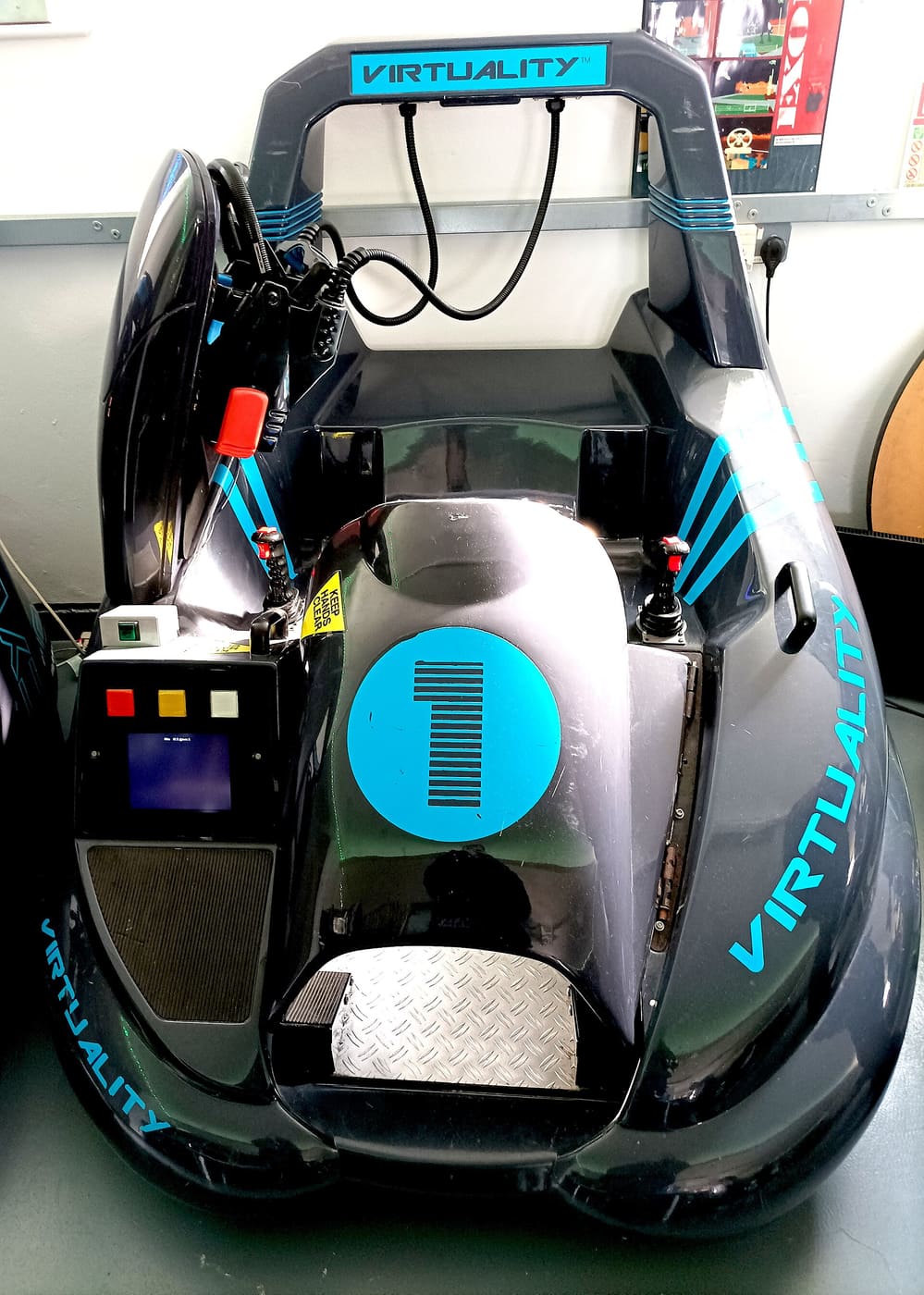
In Leicester, Jonathan Waldern's W Industries (renamed Virtuality in 1993) built the first mass-produced, networked, multiplayer VR system. The Virtuality 1000 series arrived in 1990–91: stand-up and sit-down pods driven by an Amiga 3000, with two graphics accelerators, one per eye, and an LCD headset at 372×250 per eye. Multi-pod set-ups cost up to $73,000, so you played them in arcades and shopping centres, a few minutes at a time. For a generation, Dactyl Nightmare in a Virtuality pod was what VR meant: chunky, slow, thrilling. The company went bankrupt in 1997.


The consoles try, and flinch
Sega announced Sega VR for the Mega Drive in 1991 and showed it at CES in 1993 at a planned $200. It never shipped. Sega's official line was that the effect was "too realistic" and users might hurt themselves; Sega of America boss Tom Kalinske later pointed to reports of motion sickness and severe headaches. The second answer was the true lesson.
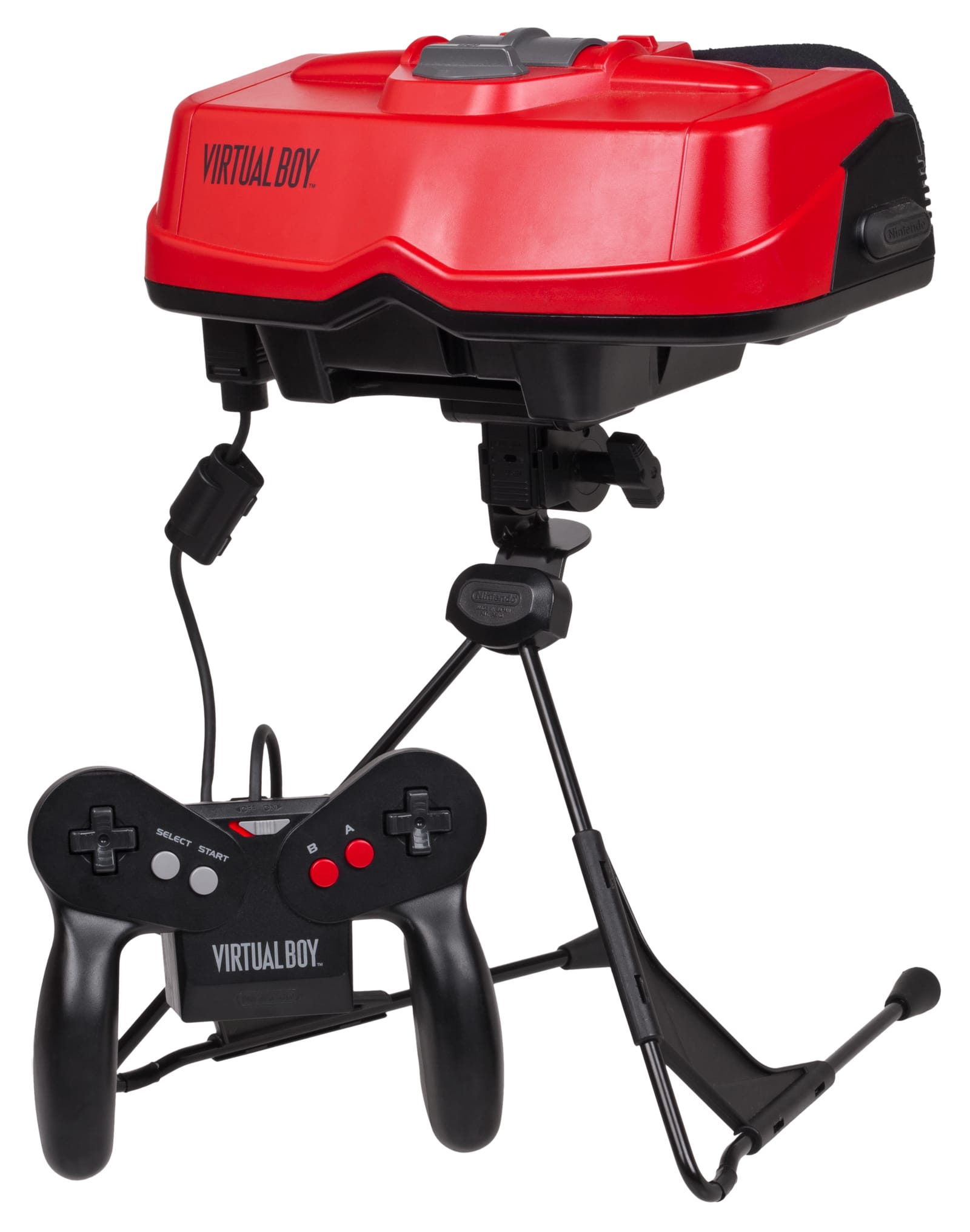
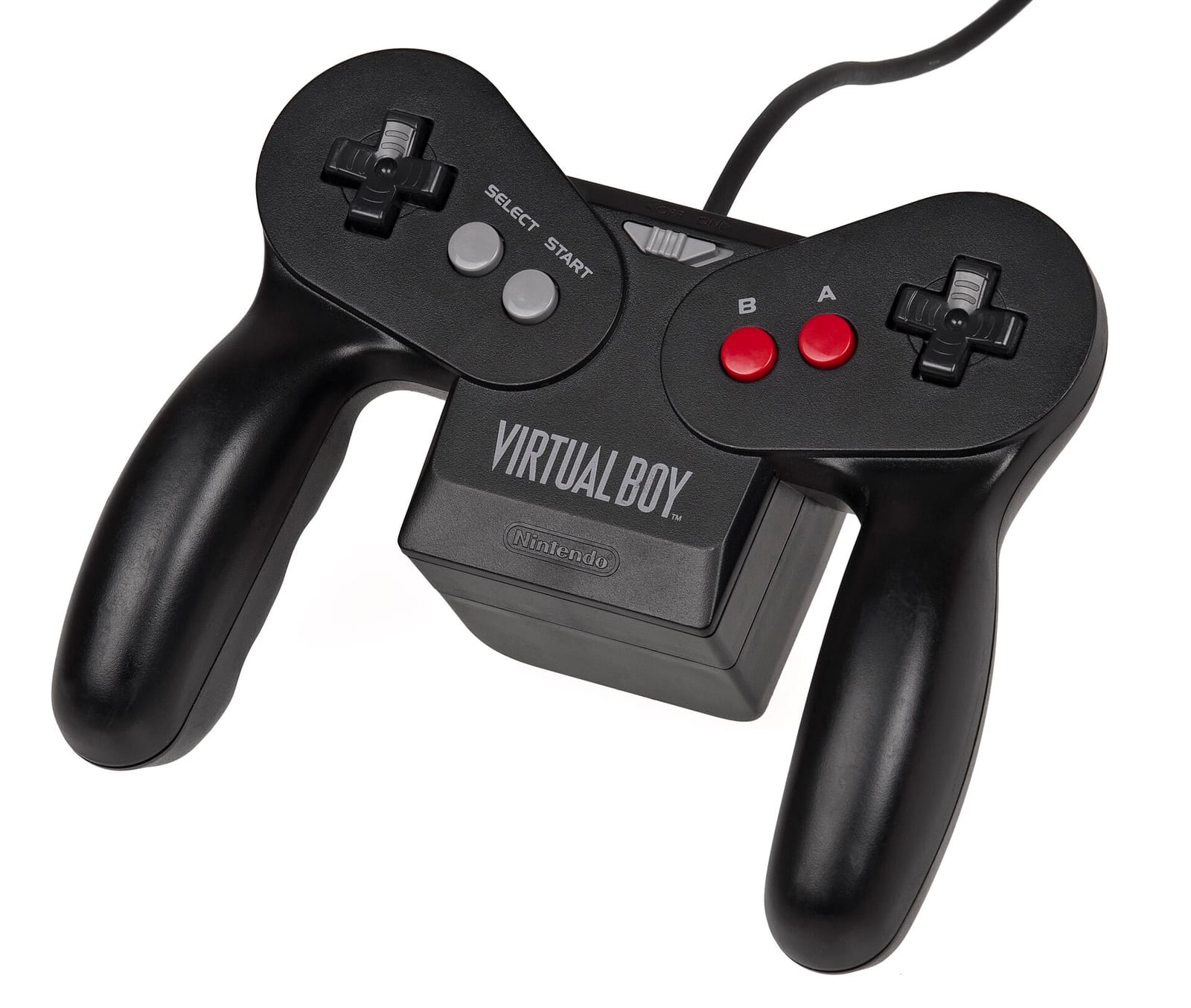
Nintendo shipped anyway. Gunpei Yokoi's Virtual Boy launched in July 1995 in Japan and August in North America at $179.95. To keep it cheap, it skipped colour LCDs altogether: a single column of 224 red LEDs per eye, swept across your vision by an oscillating mirror, painted a 384×224 image about 50 times a second. It had no head tracking at all; it was a stereo display on a stand.
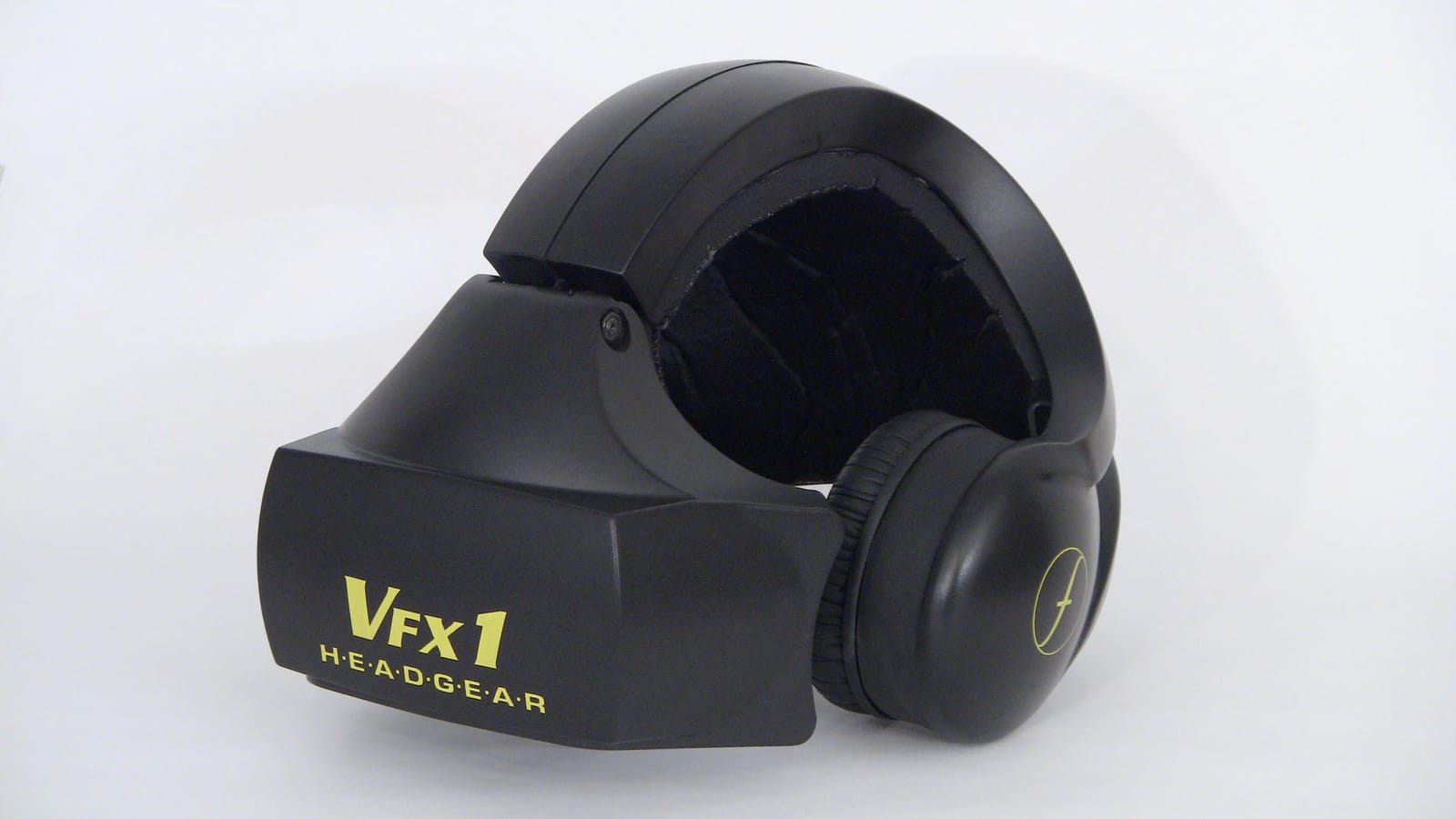
It was a flop. Reviewers cited the price, the red-on-black display, neck-cranking ergonomics, and reports of headaches, dizziness and eye strain. Japan discontinued it in December 1995, the US in 1996, after about 770,000 sales worldwide. On PC, Forte's VFX1 (1995, $695) did better with head tracking and colour LCDs at 263×230, but it was a niche toy for Descent and Quake players.



Meanwhile, in the lab: put the screens on the walls
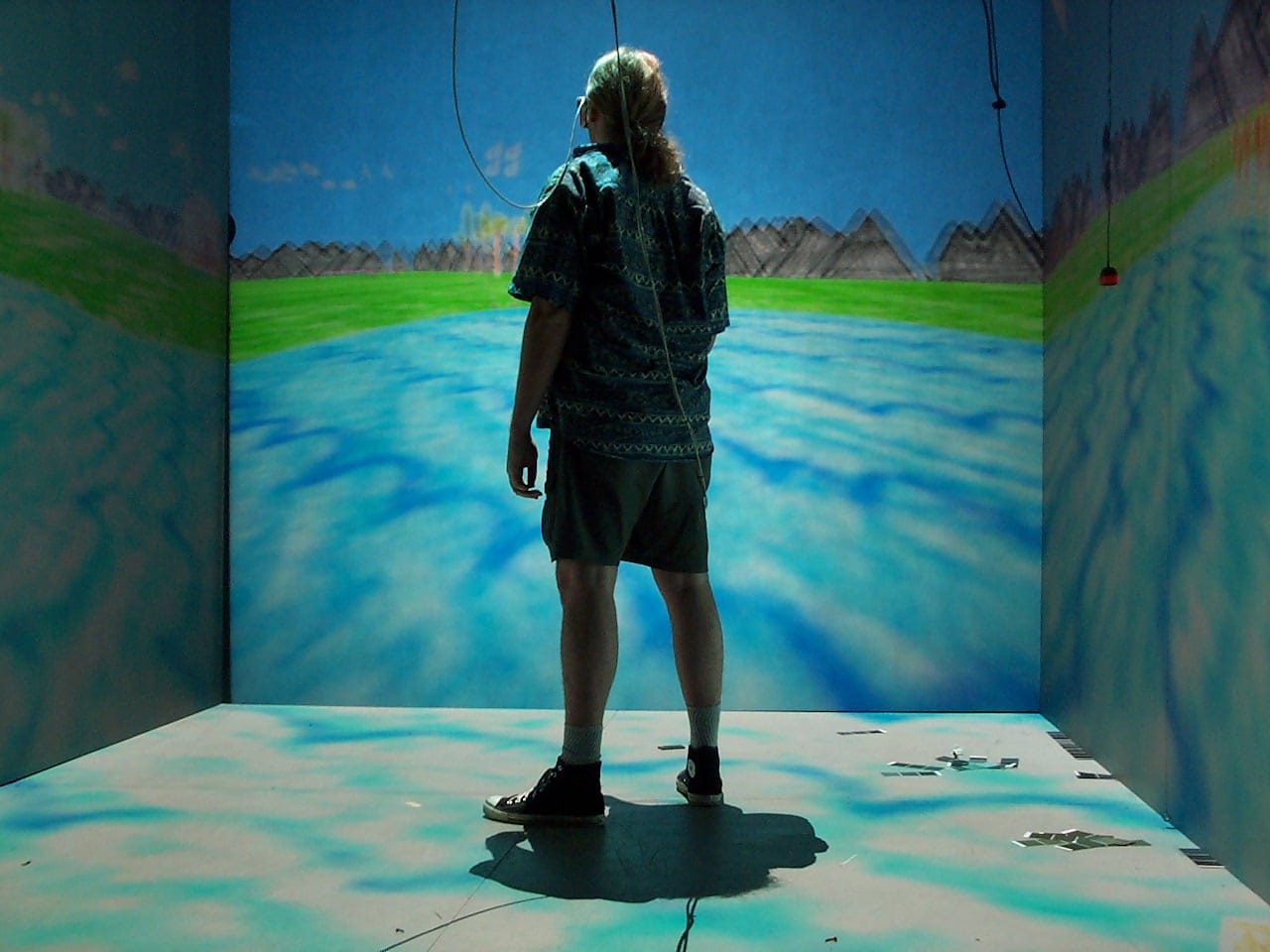
Researchers sidestepped the headset problem entirely. At the University of Illinois Chicago's Electronic Visualization Laboratory, Carolina Cruz-Neira, Daniel Sandin and Thomas DeFanti built the CAVE in 1992, a recursive acronym for CAVE Automatic Virtual Environment. Projectors throw stereo images onto three to six walls of a room-sized cube; you wear light shutter glasses and a tracker, and the world is redrawn for your viewpoint. Your own body stays visible, several people can stand inside, and nothing heavy sits on your neck. CAVEs became workhorses for car design, oil exploration and science visualisation for decades.

The web had a go too. VRML, the Virtual Reality Modeling Language, was named in 1994 and became an ISO standard as VRML97. You could, in theory, browse 3D worlds in Netscape. Over dial-up, in practice, you mostly watched a grey cube load.
Why the first boom went bust
By the late 90s, "virtual reality" was a punchline. The hype had promised The Lawnmower Man; the hardware delivered nausea. The reasons are worth knowing, because every one of them is a number modern headsets are still engineered around.
Latency. When you turn your head, the image must follow almost instantly. The gap between the movement and the light reaching your eye is called motion-to-photon latency. 90s systems took tens to hundreds of milliseconds: slow trackers, slow renderers, slow displays, all stacked. Your inner ear says "we turned"; your eyes say "not yet". That mismatch is a recipe for simulator sickness.
Resolution and field of view. A few hundred pixels across, stretched by wide lenses, looked like a screen door made of Lego. Narrow the view instead and it felt like peering down a toilet roll.
Tracking. Magnetic trackers drifted near metal, ultrasonic ones lost line of sight, and consumer kits like the Virtual Boy skipped head tracking entirely. An image that does not stay put in the world is not presence; it is a TV glued to your face.
Compute and cost. Convincing 3D needed Silicon Graphics workstations costing as much as a house. Consumer PCs could not render two views fast enough, and a usable headset cost more than the computer.
What survived the winter
VR did not die; it went back to work. The military kept training pilots and soldiers in simulators. Medicine used it for surgical training and, at the HIT Lab, for pain distraction in burn patients with SnowWorld. CAVEs kept humming in universities and car companies.
And the metaverse found another door. Second Life launched on 23 June 2003: no headset, just a desktop window into a persistent world with its own economy, land and fashion. Philip Rosedale had founded Linden Lab in 1999, originally to build immersive hardware. In early 2009 it peaked at 88,200 avatars in-world at once. The social half of the dream turned out to work fine on a flat screen.
The hardware half was being solved, quietly, in your pocket. Smartphones needed exactly what VR lacked: tiny high-density displays, cheap accelerometers and gyroscopes, low-power graphics chips, and the factories to make them by the hundred million. Bright, fast OLED panels arrived, the iPhone 4 put a gyroscope in millions of pockets in 2010, and component prices fell off a cliff. Nobody was building VR. They were building phones. It came to the same thing.
By 2011 every part needed for a good, cheap headset existed. Someone just had to tape them together.
Next: a teenager in California, a box of phone parts, and a Kickstarter that woke the whole industry up.
A kid, a garage and a Kickstarter
By 2012, virtual reality was a punchline. The arcade pods had gone dark, the Virtual Boy was a collector's curiosity, and "VR" mostly meant a 1990s movie with bad CGI.
Then a 19-year-old in Long Beach, California, started posting about a headset he'd built in his parents' garage.
Palmer Luckey was a headset collector who had grown tired of the old ones. His fix was cheeky: take a cheap, high-resolution phone-sized panel, put a pair of strong magnifying lenses in front of it, and fix the fish-eye distortion in software instead of with heavy, expensive glass. Crude. Wide. Shockingly immersive.
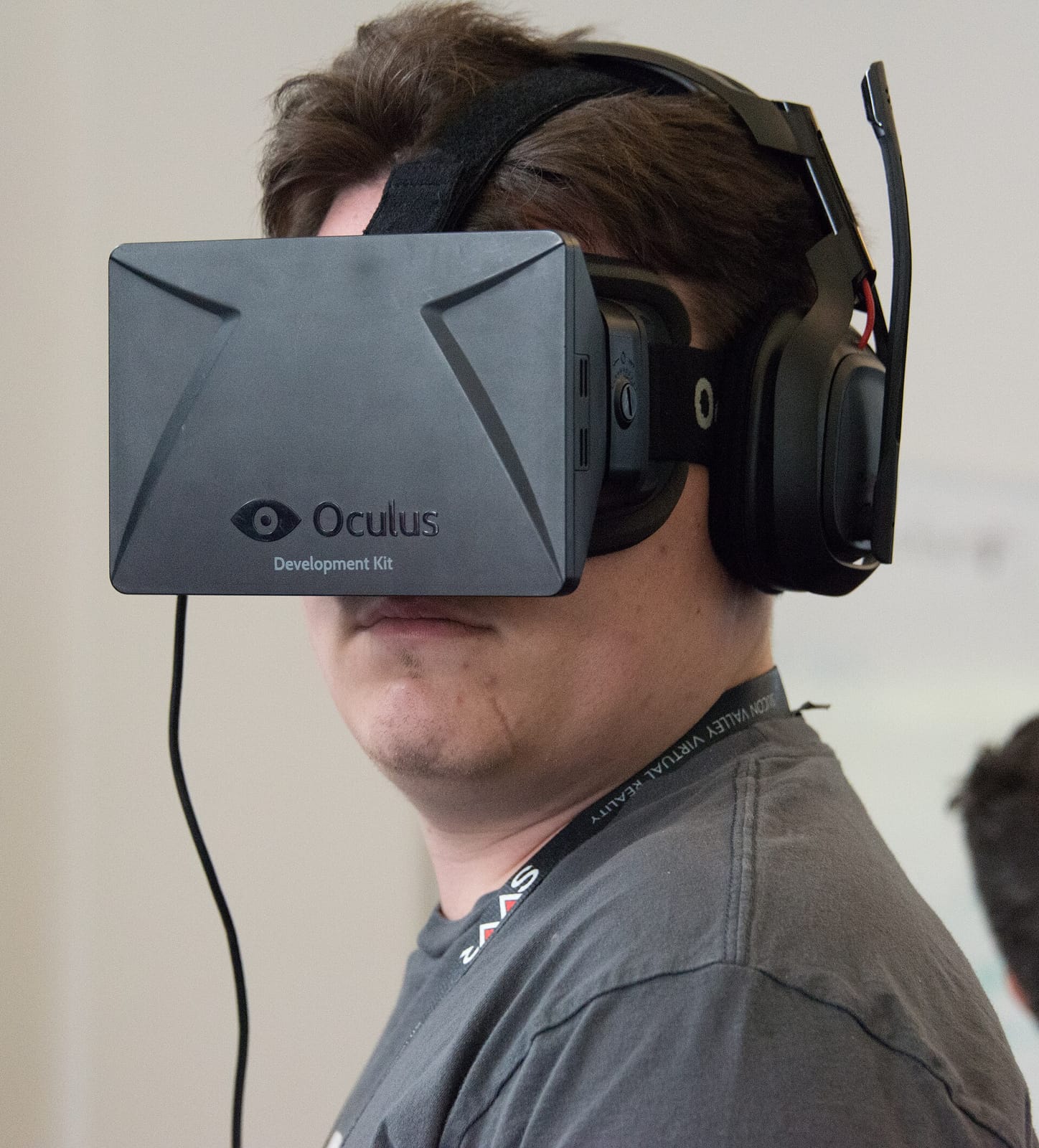

John Carmack, the programming legend behind Doom and Quake, got hold of one of the prototypes, strapped it to his head with what was famously a duct-taped ski-goggle strap, and showed Doom 3: BFG Edition running on it to the press at E3 in June 2012. The demo did the rounds. People who had given up on VR started paying attention again.
On 1 August 2012, Luckey's new company, Oculus, launched a Kickstarter for a developer kit called the Rift. It asked for US$250,000. It raised US$2,437,429 from 9,522 backers.
Why it worked this time
The idea wasn't new. The parts were. The smartphone boom had quietly built the VR industry's whole supply chain and handed it over at pocket-money prices:
- Sharp little screens. Phone panels got dense and cheap enough to sit centimetres from your eyes.
- IMUs. The tiny gyroscopes and accelerometers that rotate your phone's screen could report head rotation hundreds of times a second (the Rift sampled at 1,000Hz).
- Mobile GPUs and fast processors to draw the world, and lots of them.
What was left was a brutal fight against time. Turn your head and the picture has to keep up, or your inner ear and your eyes start arguing and your lunch joins in. The industry's target is motion-to-photon latency under about 20 milliseconds: the time from your head moving to the light on the display changing.
Oculus and the teams around it attacked every link in that chain. The DK1 (shipped 2013) had a 60Hz LCD at 640×800 per eye and could only track rotation. The DK2 (2014) switched to an OLED panel at 960×1080 per eye and 75Hz, with low persistence: instead of holding each frame lit, the OLED flashes it for a couple of milliseconds and goes dark. Your brain fills the gaps, and the smear vanishes. An external camera watching infrared LEDs on the headset added positional tracking, so you could lean in.
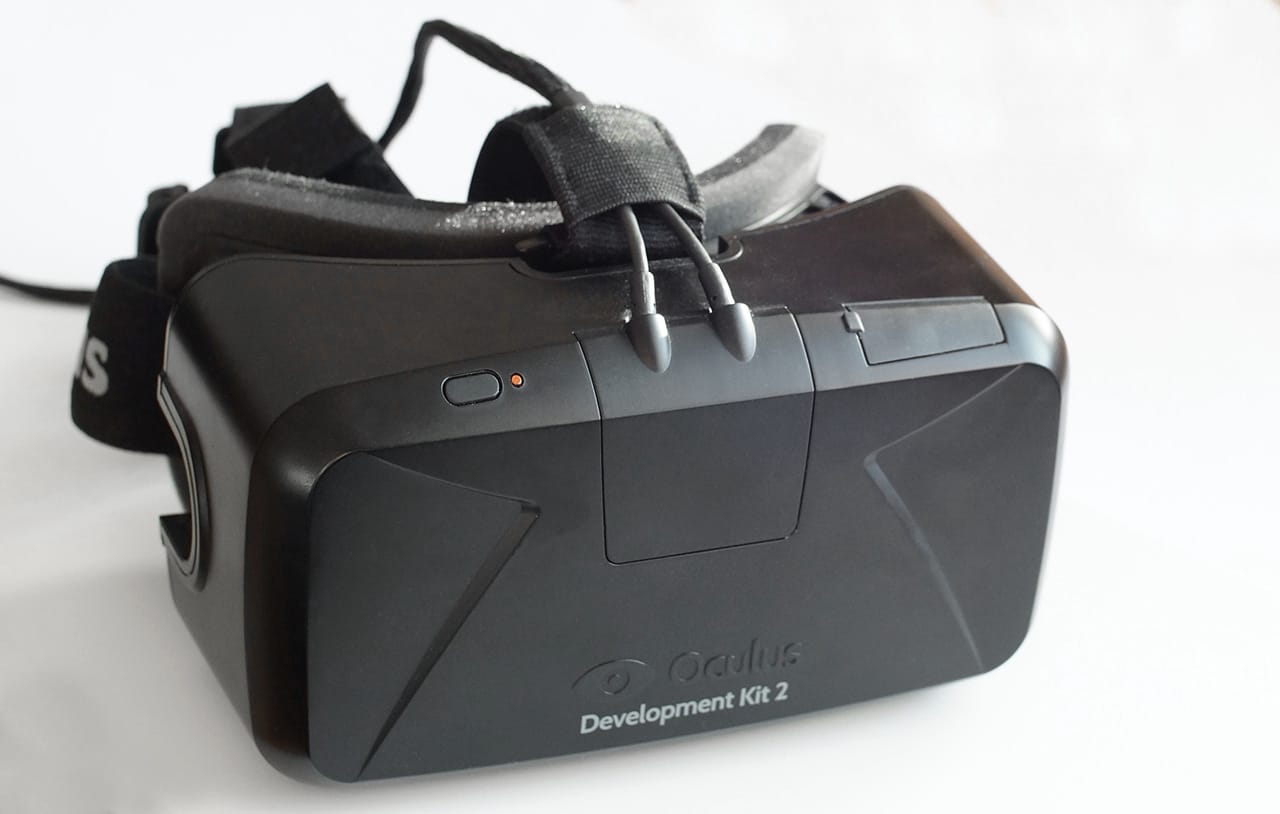

Then came the clever cheat: asynchronous timewarp (and its cousins, reprojection and spacewarp). Just before a frame goes to the display, the system grabs the very latest head pose and warps the already-rendered image to match. If the game misses its deadline, the headset reuses the last frame, shifted. You almost never notice. Your stomach is grateful.
- Carmack's duct-tape demo
Doom 3 on a Luckey prototype at E3 puts VR back in the gaming press.
- Oculus Rift Kickstarter
US$2.44M from 9,522 backers for a developer kit.
- Carmack joins Oculus
He becomes CTO and later leads the push into mobile VR.
- Facebook buys Oculus
About US$2B in cash and stock, plus a US$300M earn-out.
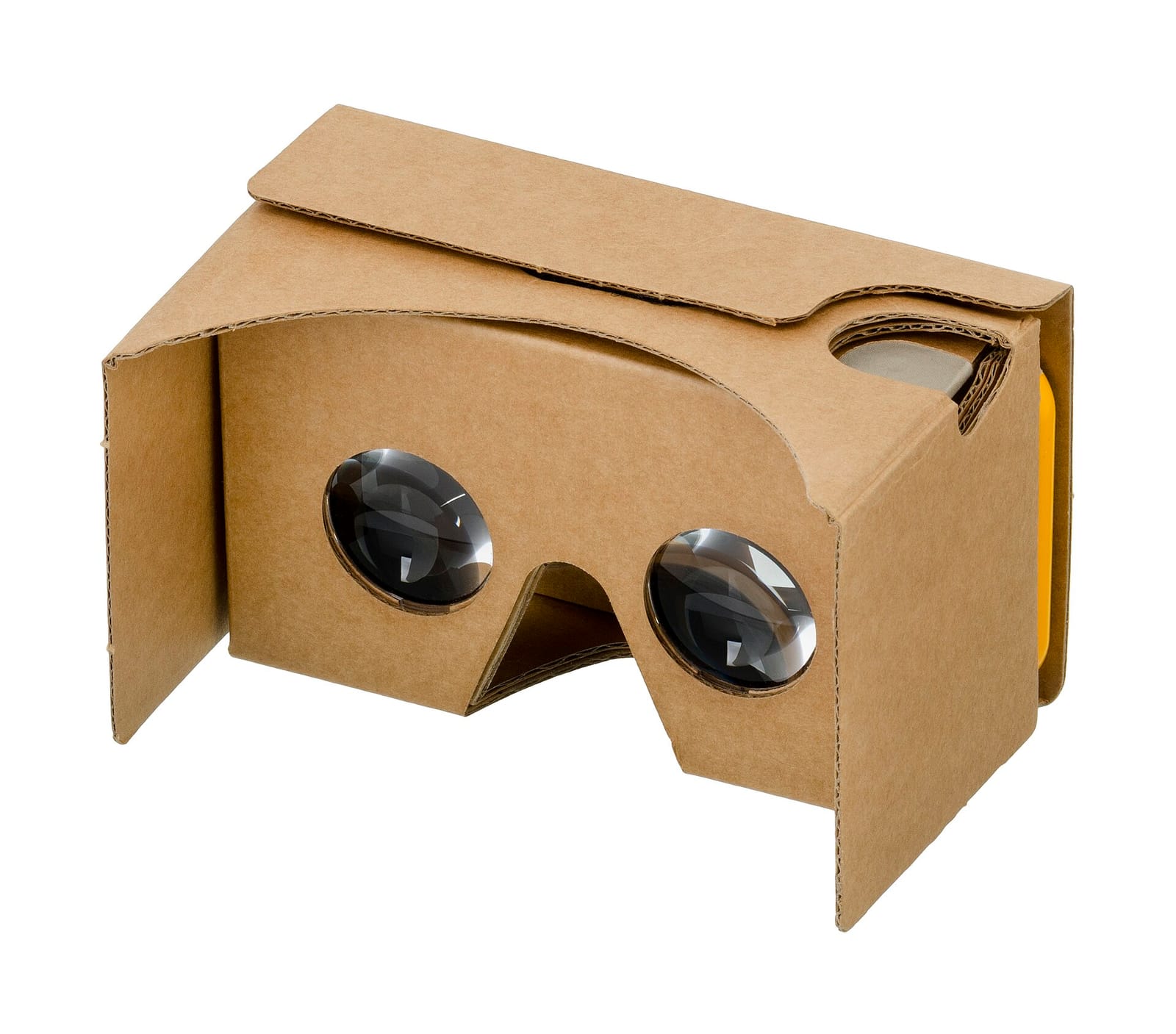
- Google Cardboard
A folded cardboard viewer, two lenses and your phone. VR for the price of lunch.
- Samsung Gear VR
Built with Oculus, the consumer version slots a Galaxy phone into a US$99 headset.
“Oculus has the chance to create the most social platform ever, and change the way we work, play and communicate.”
— Mark Zuckerberg, Facebook press release announcing the Oculus deal, March 2014
Cardboard and Gear VR mattered more than they get credit for. Millions of people had their first taste of VR on a phone: a rollercoaster, a 360° news film, a shark swimming past. Phone VR could only track which way you were looking, not where you were, and it is mostly gone now. But it taught a generation what the word meant.

Room-scale arrives
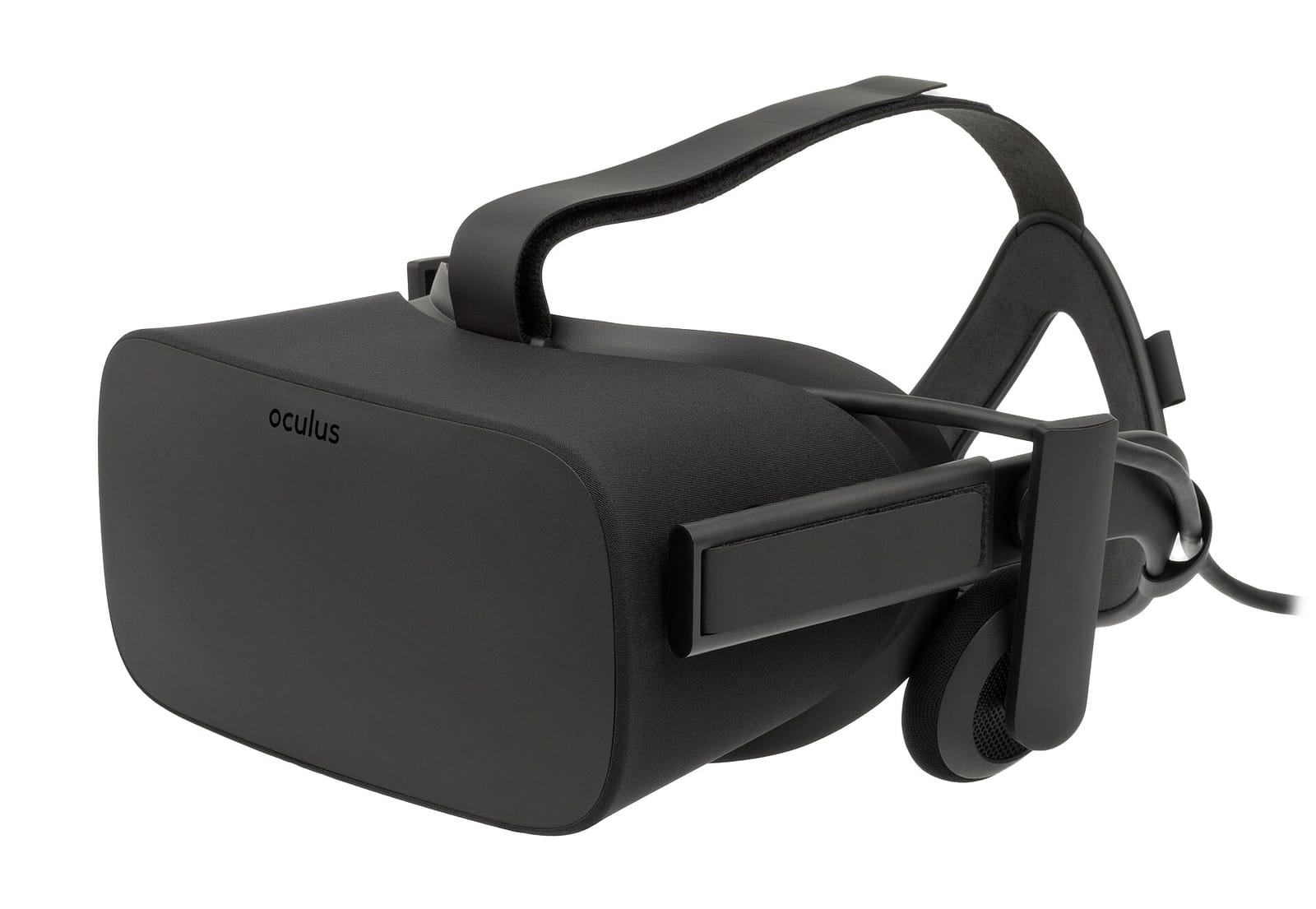
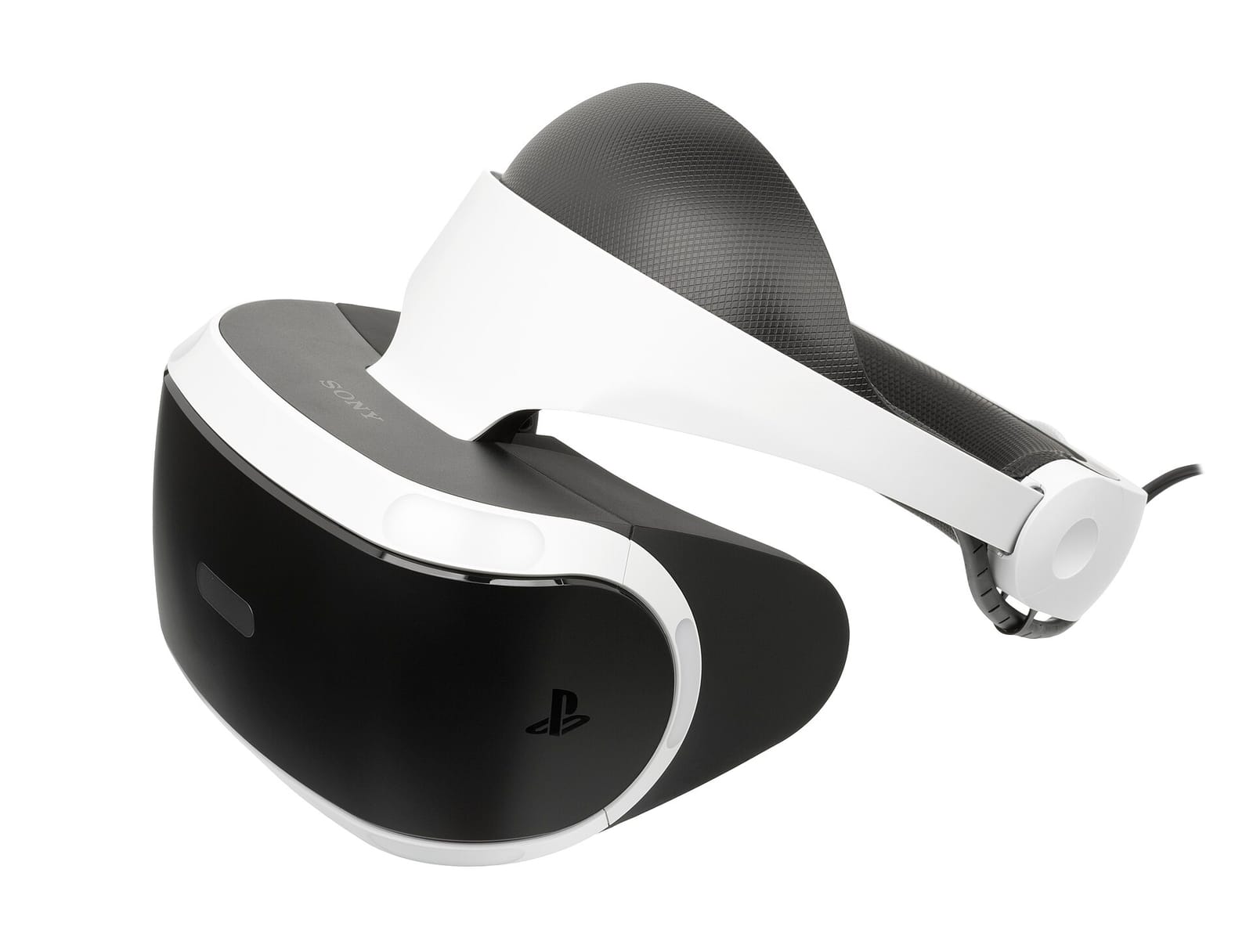
2016 was the year VR became something you could actually buy. The Oculus Rift shipped in March (US$599), the HTC Vive in April (US$799), and PlayStation VR in October (US$399). Rift and Vive both ran at 1080×1200 per eye at 90Hz; PSVR could go to 120Hz.

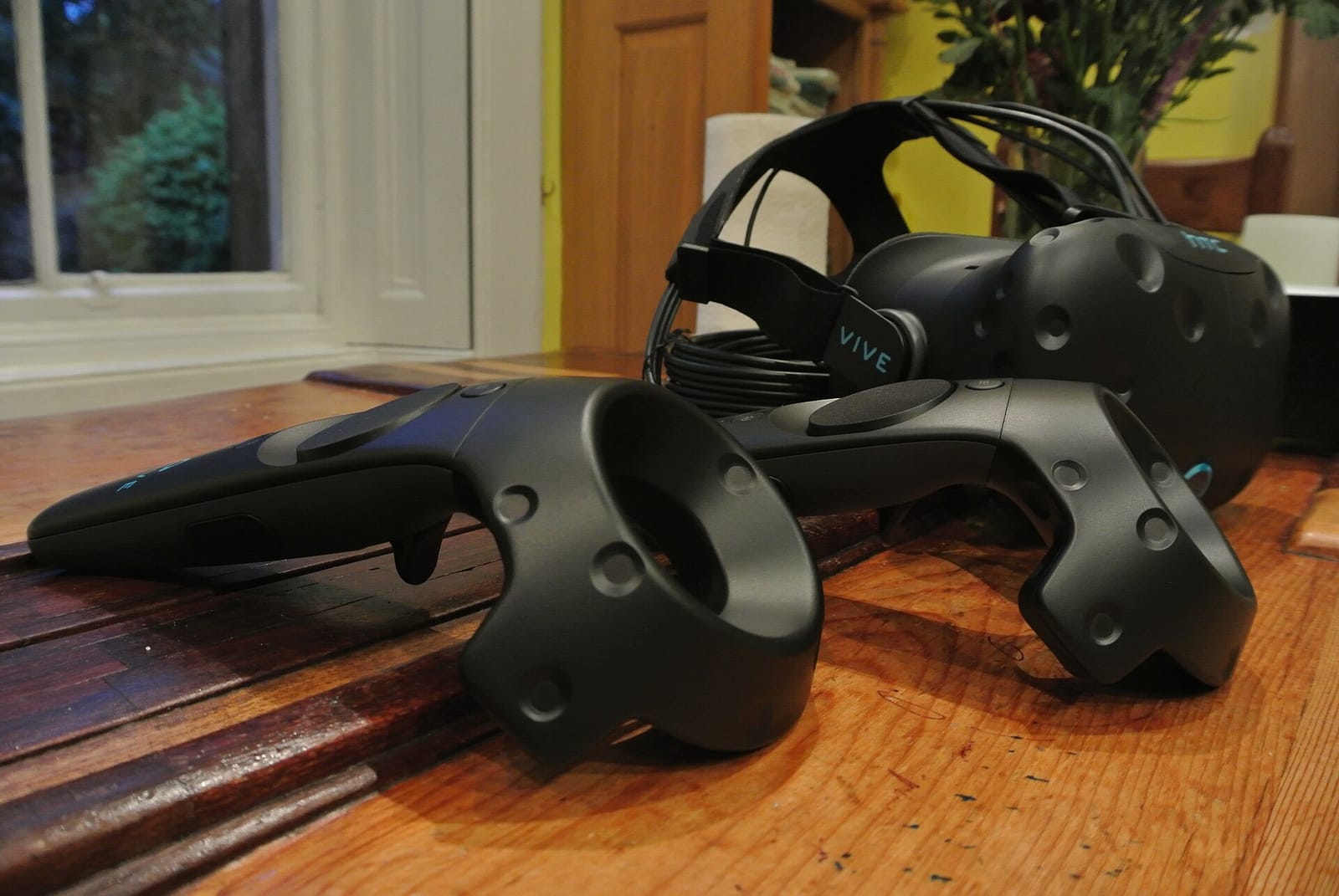


The Vive was the one that made jaws drop, thanks to Valve's Lighthouse tracking. You didn't sit in a chair. You walked around.
That's outside-in tracking: something in the room watches you (Oculus used cameras; Valve used lasers and sensors). It's precise, but you have to mount boxes on your walls and run cables to a gaming PC. Fine for enthusiasts. A non-starter for your gran.
The fix was to turn the problem inside out.
Cut the cord
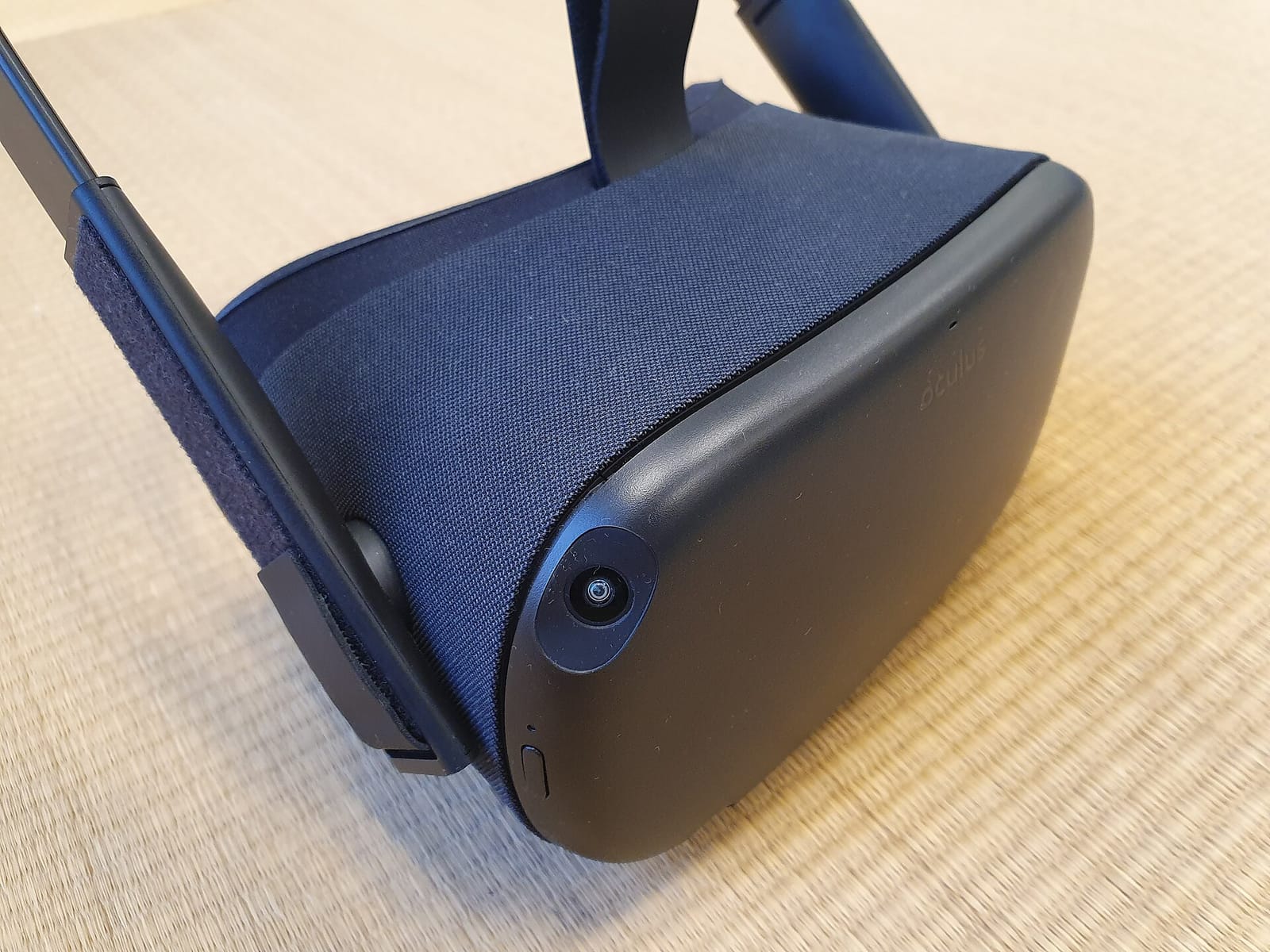
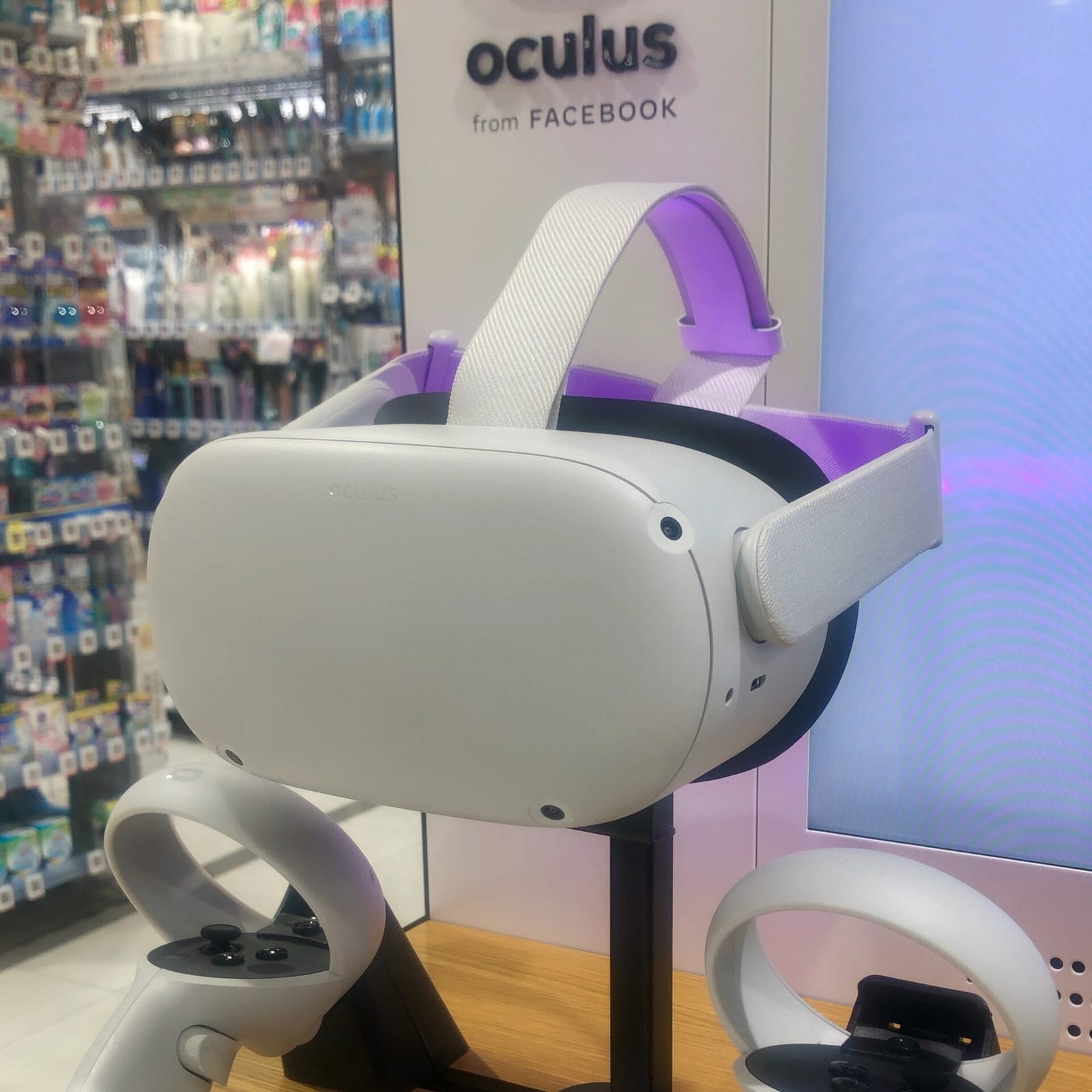
In May 2019, Facebook shipped the Oculus Quest (US$399): a phone-class Qualcomm chip, four wide-angle cameras for inside-out tracking, battery in the strap, no PC, no wires, no wall boxes. Out of the box, around the lounge, done. The Quest 2 followed in October 2020 at US$299, sharper and lighter, and became the headset most people mean when they say "a VR headset".


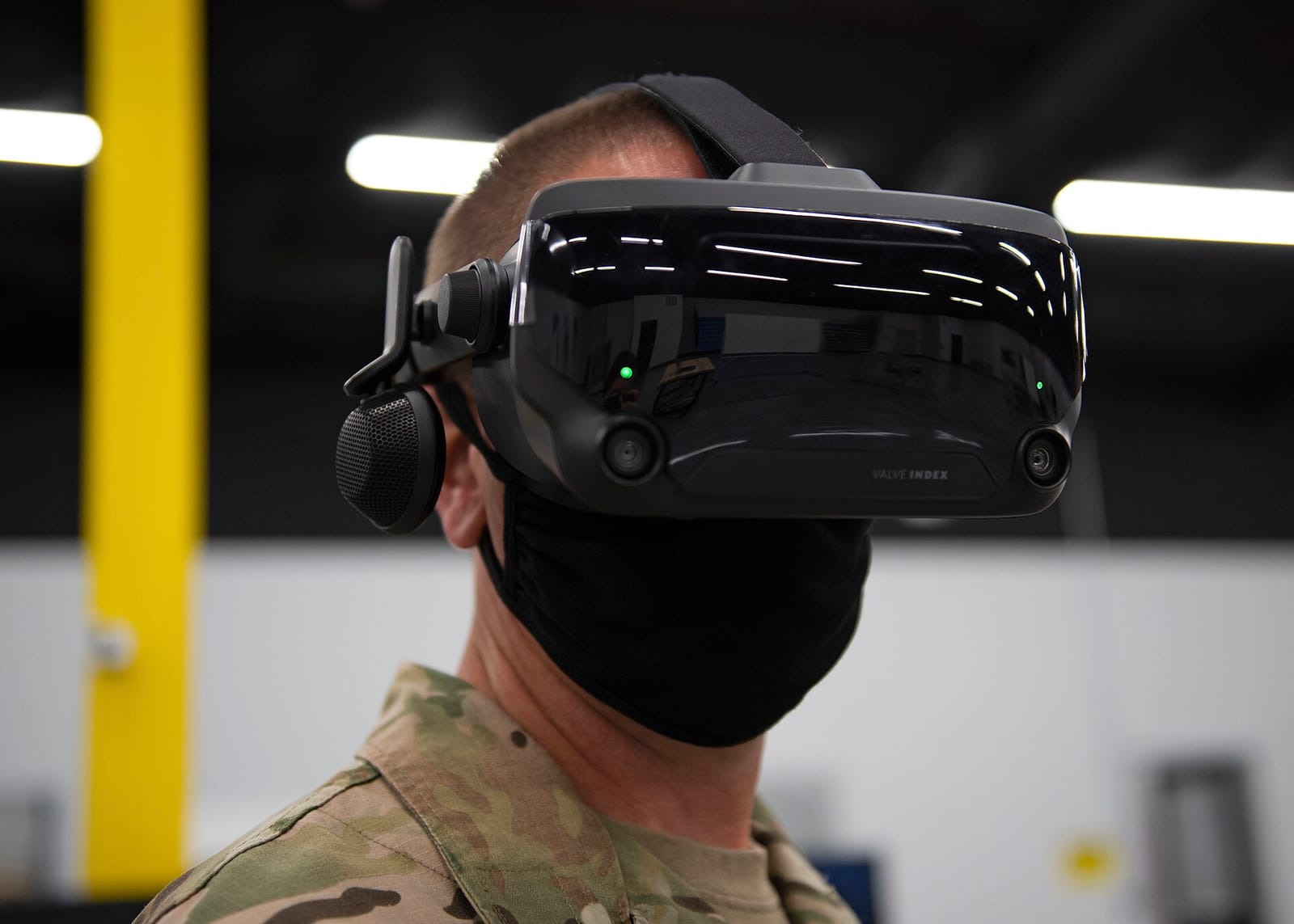
The same June, Valve went the other way with the Index (US$999 full kit): a PC headset with 120–144Hz displays and controllers that tracked individual fingers. A niche box, but the reference standard for years.

Hardware needs a reason to exist. Two games gave it one.
Beat Saber (early access, May 2018) was the gateway drug: slice flying blocks to the beat with two lightsabers. Easy to explain, impossible to stop. Facebook bought its Czech studio, Beat Games, in 2019.
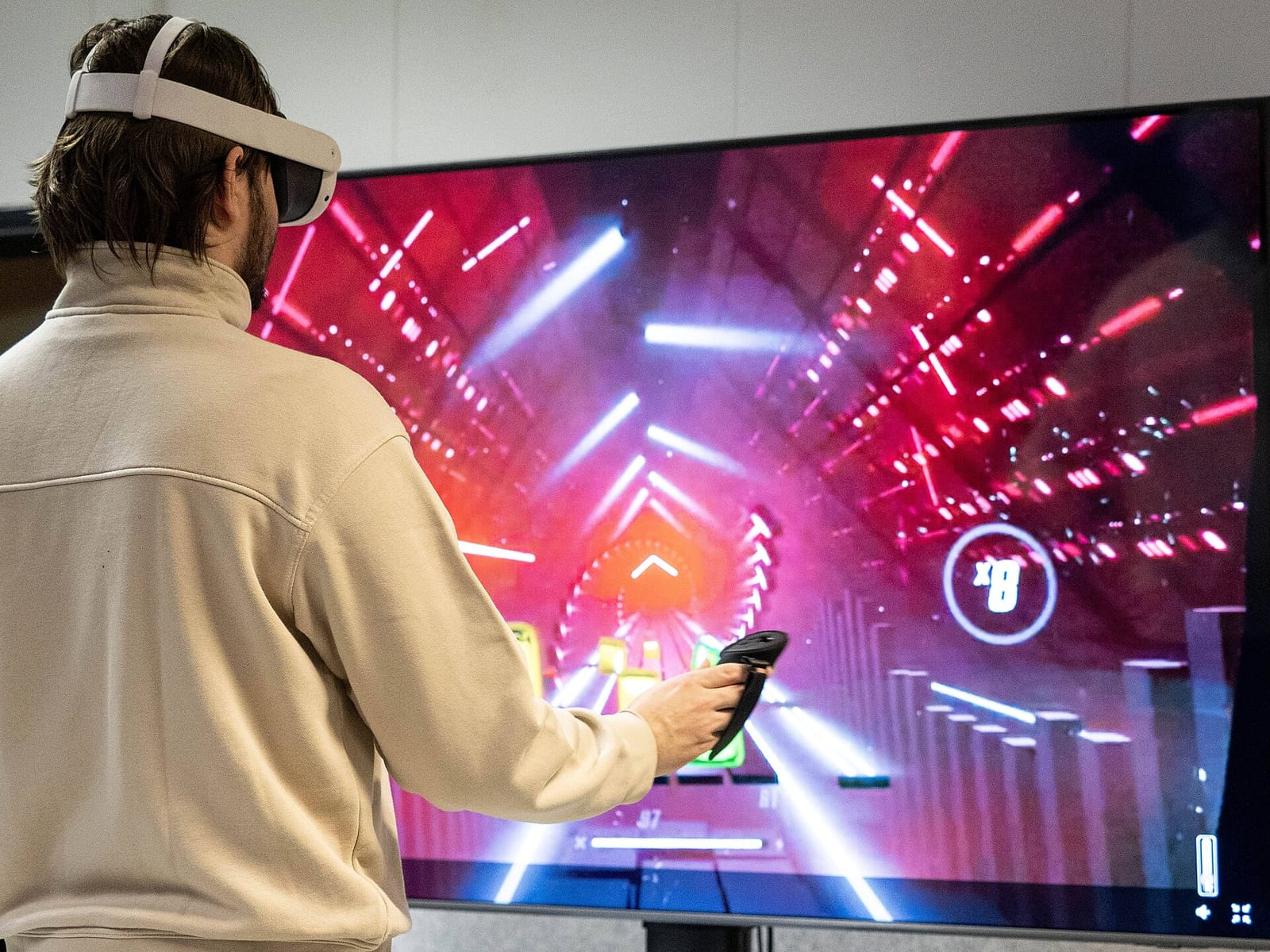

Half-Life: Alyx (March 2020) was the proof. Valve's first new Half-Life in over a decade was built for VR from the ground up: you rummage through drawers, pull ammo from over your shoulder, hold a door shut against something horrible. It arrived as the world went into lockdown, and for a while you couldn't buy a headset anywhere.
Thinner, sharper, see-through
Look inside an older headset and you'll find fresnel lenses: flat-ish lenses cut into concentric ridges, light and cheap, but they need a long gap between screen and eye (hence the front-heavy "shoebox" look) and they throw off glare rings, the dreaded "god rays".
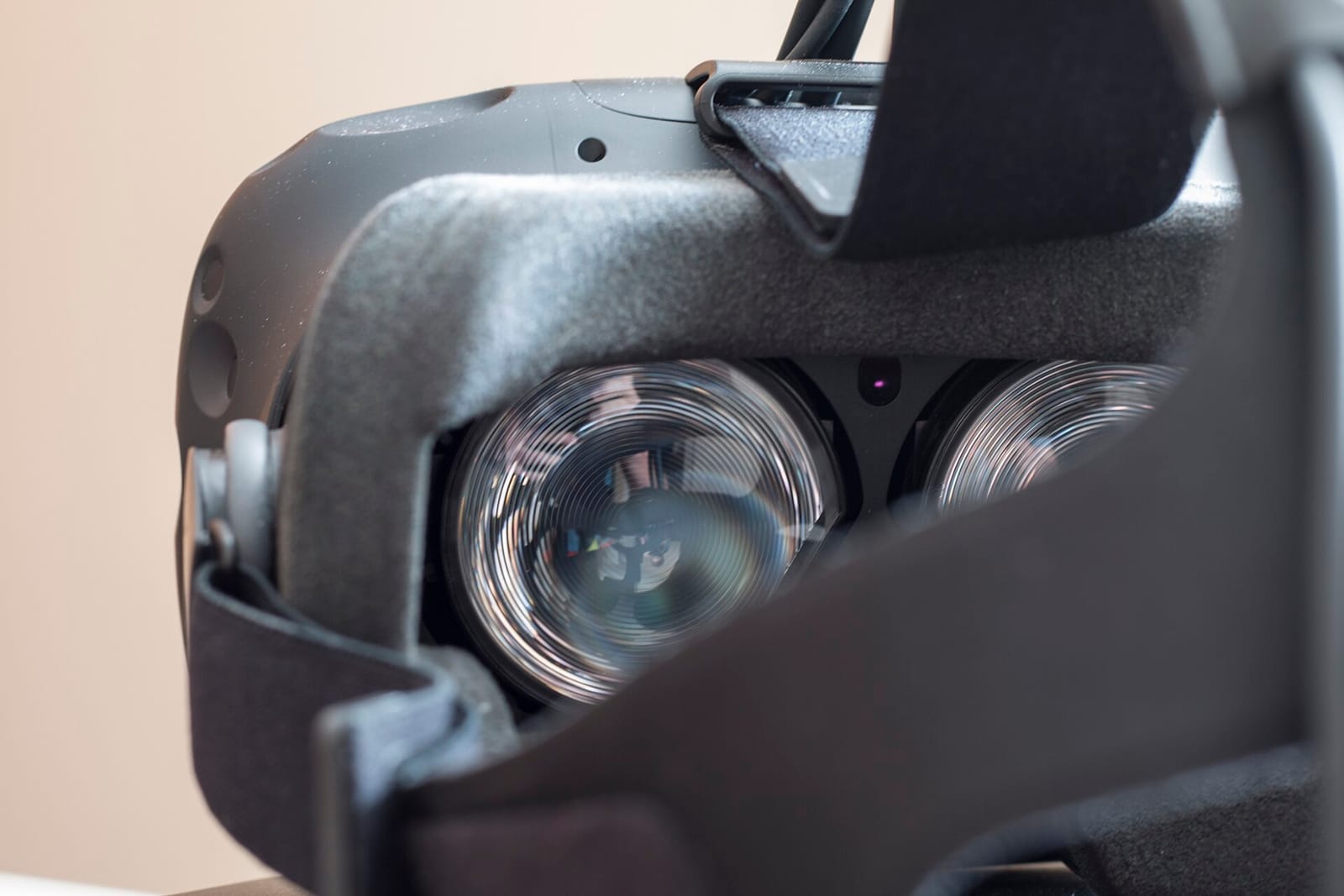

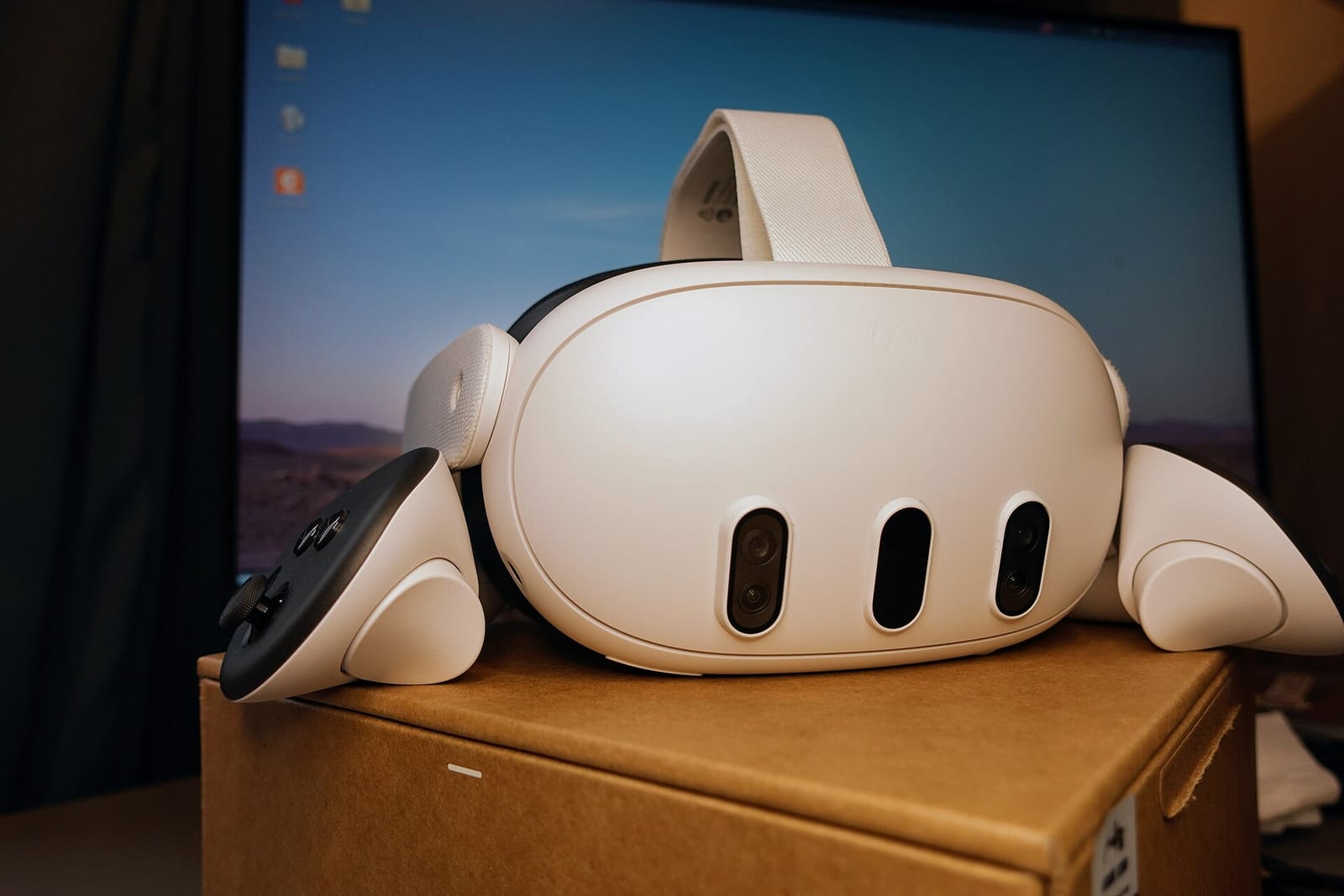
Pancake lenses reached Meta's line with the Quest Pro in 2022, then went mainstream in the Quest 3 (October 2023, US$499). The Quest 3's other trick was full-colour passthrough: cameras feed you a live view of your room, so virtual objects can sit on your actual coffee table. That's mixed reality, and it moved VR from "a different place" to "your place, upgraded". The Quest 3S (October 2024, US$299) brought the same chip and passthrough back down to an entry price, with the older fresnel optics.

Apple walks in, and everyone else follows
On 2 February 2024, Apple released the Vision Pro in the US at US$3,499. Apple avoided the words "virtual reality" almost entirely; it sold "spatial computing". There were no controllers. You look at a button and pinch your fingers together, tracked by cameras pointed at your eyes and hands. Two micro-OLED displays pack roughly 23 million pixels between them. Text was finally sharp enough to work in.
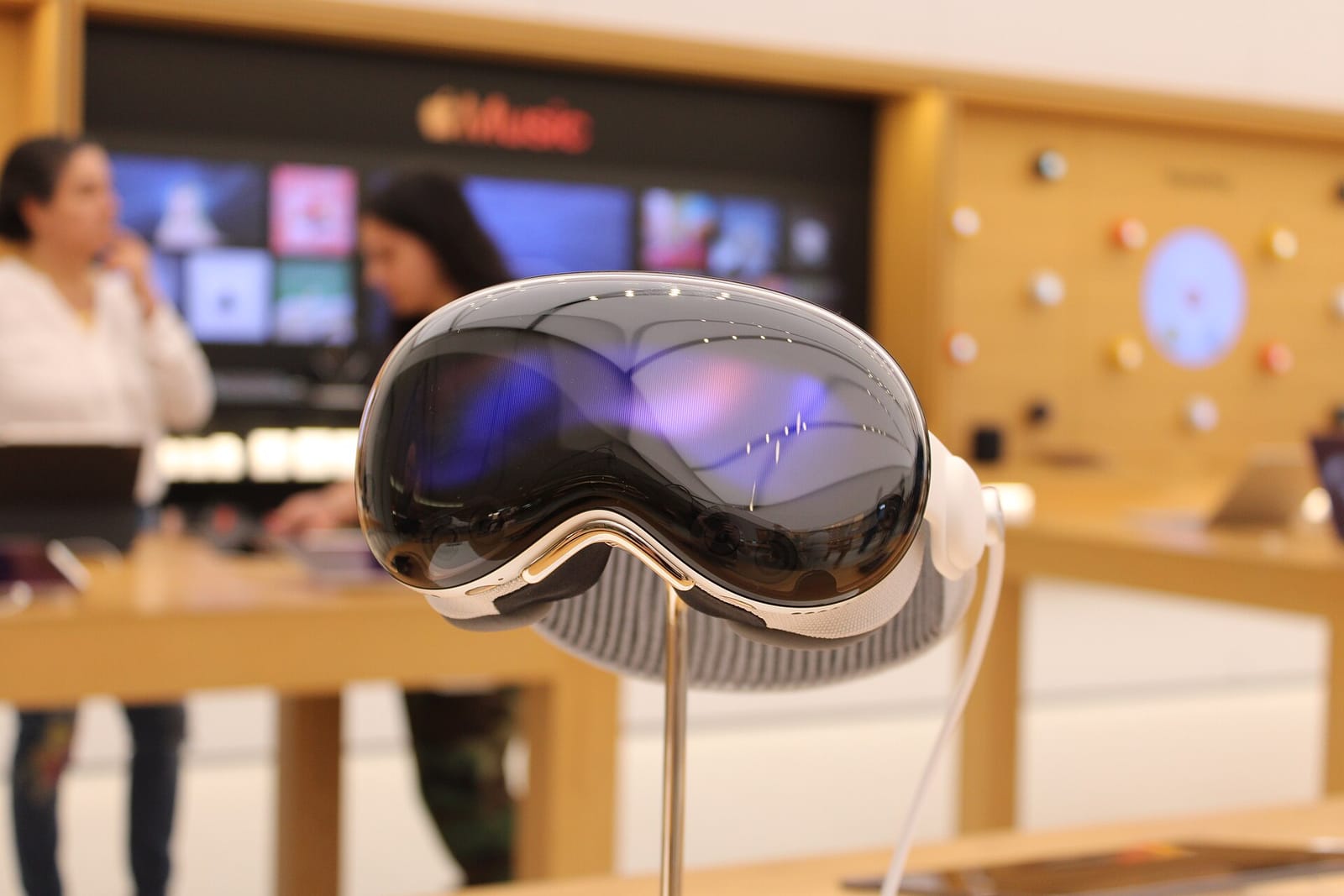

It was heavy and expensive, and it hasn't sold in big numbers. But it moved the goalposts on what a headset should look and feel like. Apple refreshed it with the M5 chip in October 2025, adding a little more resolution, up to 120Hz and better battery life.
Google and Samsung answered with Android XR, and on 21 October 2025 Samsung launched the Galaxy XR at US$1,799: Vision Pro-class displays (3,552×3,840 per eye), eye and hand input, and Gemini AI built in.
And Valve came back. Announced on 12 November 2025, the Steam Frame is a standalone headset that also streams from your PC, with pancake lenses and eye tracking that drives foveated streaming: more bitrate where you're looking, less where you're not. After a delay Valve blamed on the global memory shortage, it went on sale through a reservation lottery in September 2026, from US$1,059. Valve has since discontinued the Index.
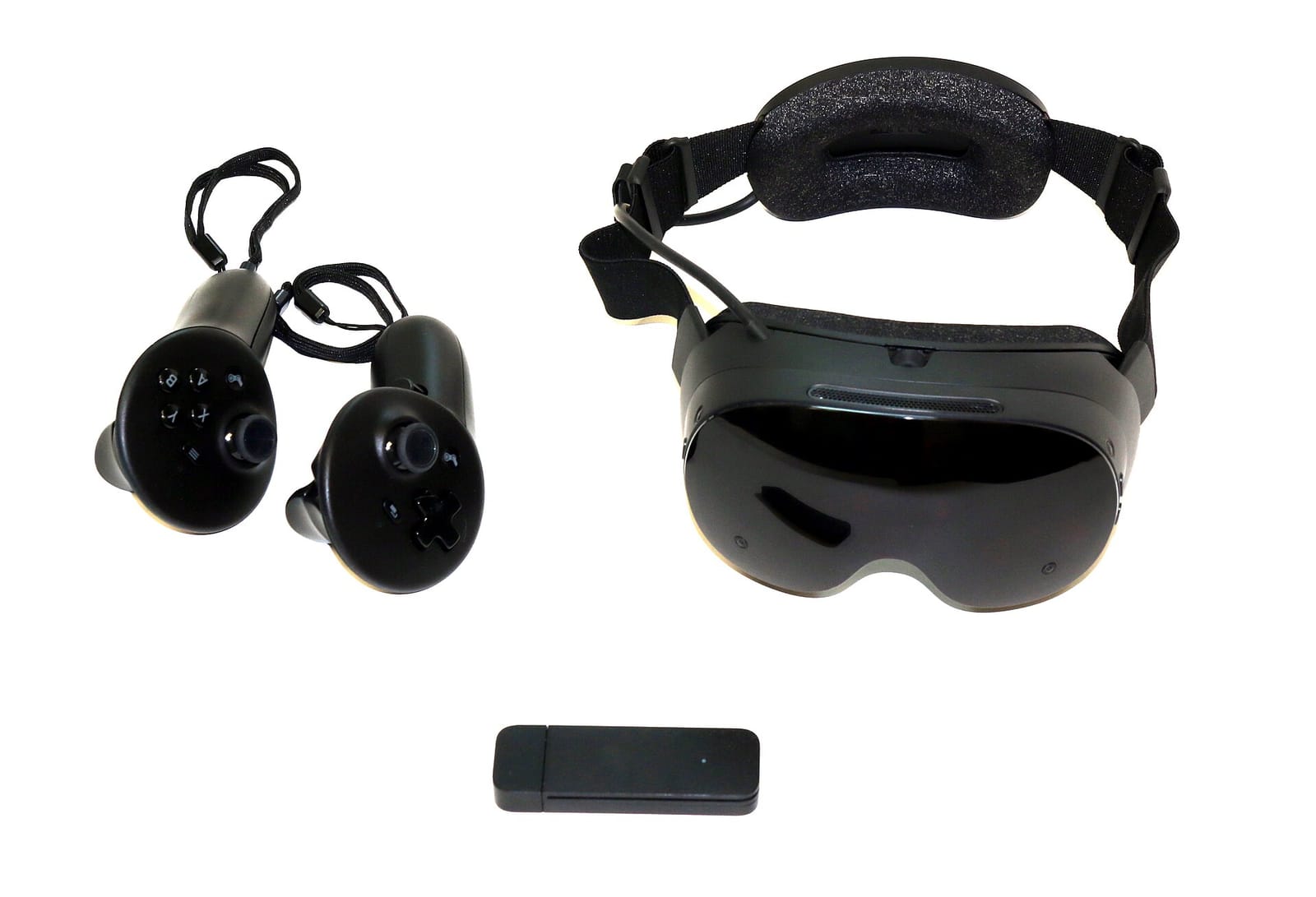

The metaverse hangover
In October 2021, Facebook renamed itself Meta and told the world the metaverse was next. Many people's first reaction was legless cartoon avatars in a virtual office.
The bill has been extraordinary. Meta's own filings put Reality Labs' operating loss at US$19.19 billion in 2025 alone, and adding up the segment's reported annual losses since 2020 gives roughly US$83.6 billion. Some of that is VR. A growing share is smart glasses and AI.
Those glasses are where the money is heading. The Meta Ray-Ban Display (30 September 2025, US$799) puts a small private screen in one lens and comes with the Meta Neural Band, a wristband that reads the electrical signals in your forearm muscles (EMG) so a tiny pinch or thumb swipe controls the glasses. At Connect in September 2026, Meta went further: Meta VR Glasses, around 100g with a tethered compute puck, priced at US$1,300 and due in spring 2027.
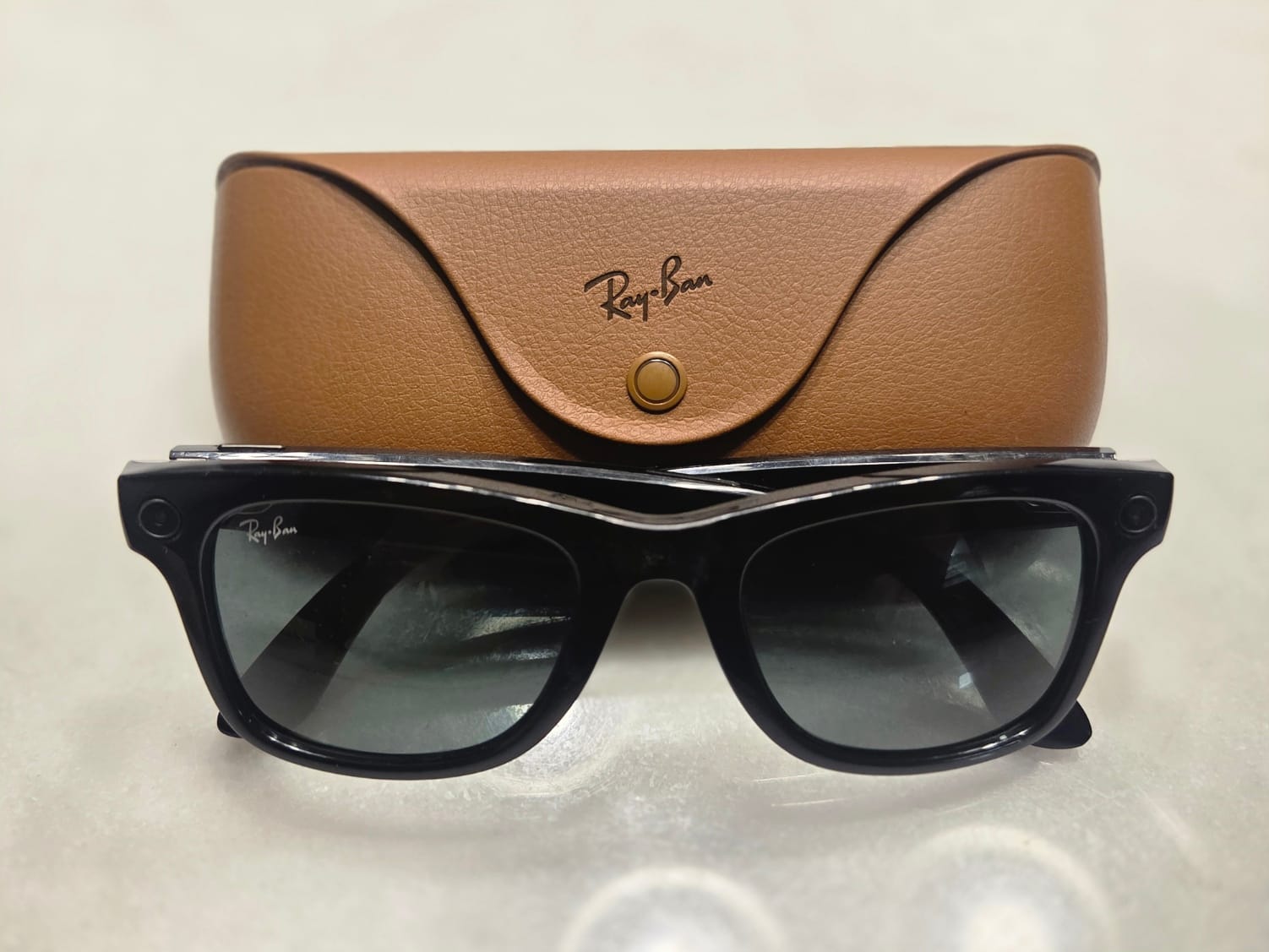

The next chapter is being written here too
VR's story is often told as Silicon Valley's. It isn't only that.
In Cape Town, Electric South runs the New Dimensions lab, bringing African artists and creative technologists together to make XR. In 2017, with the Goethe-Institut, it toured a slate of African VR films to festivals and screenings, including a stop in Johannesburg: Let This Be A Warning by Kenya's The Nest Collective (directed by Jim Chuchu), Spirit Robot by Ghanaian writer Jonathan Dotse, set at Accra's Chale Wote festival, Nairobi Berries by Ng'endo Mukii and The Other Dakar by Selly Raby Kane. The lab reached its seventh edition in 2024.
In Lagos, Judith Okonkwo's Imisi 3D has spent years building Nigeria's XR ecosystem. In Nairobi, BlackRhino VR, founded in 2015, makes VR, AR and animation for African audiences and opened its own XR lab and exhibition space.
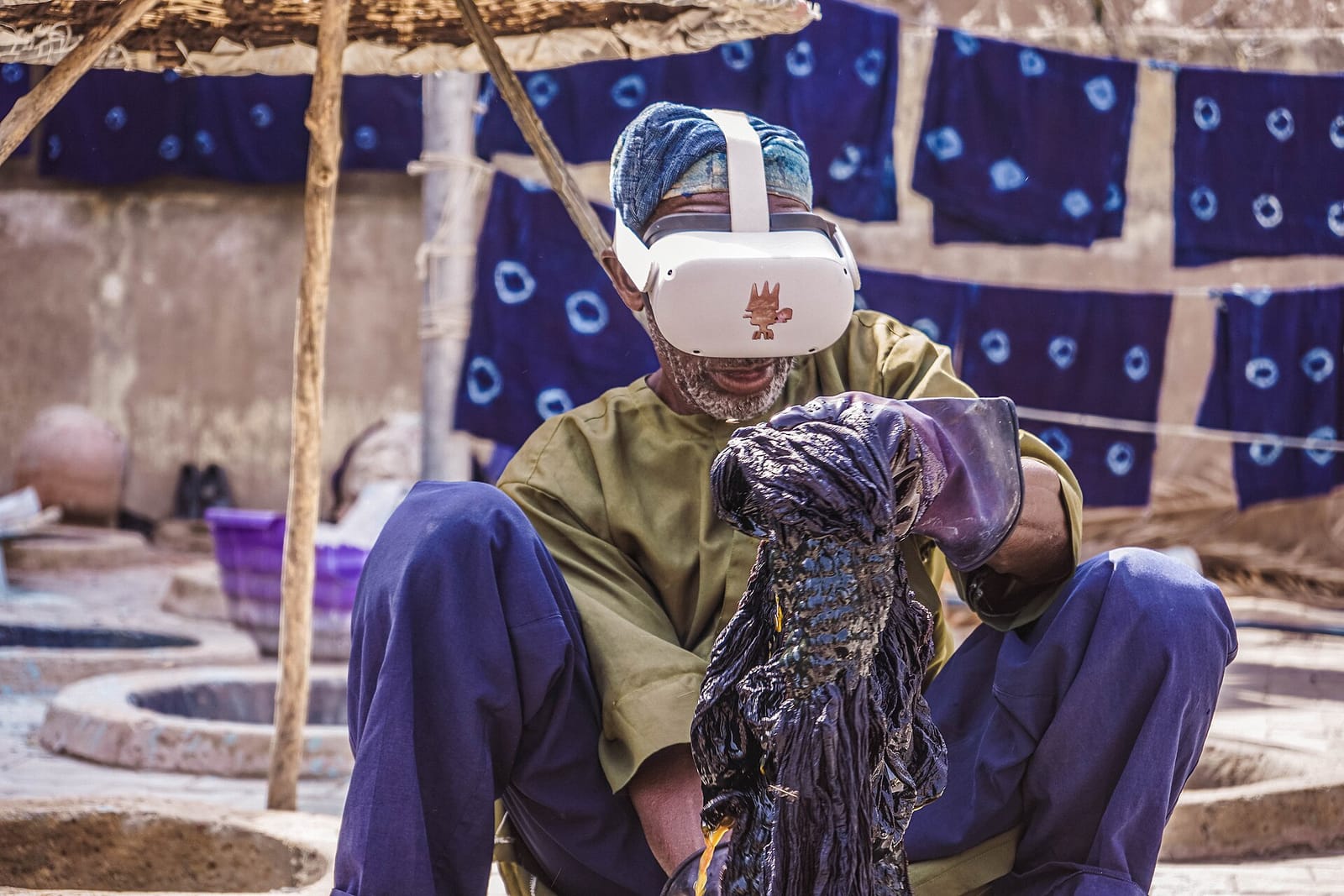

And in Johannesburg, WE ARE VR has been getting headsets onto heads since 2018: artists, developers, educators and dealmakers learning in public, one meetup at a time.
Towards the visual Turing test
Meta's research labs have a name for the finish line: the visual Turing test. A headset passes when you can't tell what's on the display from the real world through a window. Nothing passes yet. The prototypes show what's missing.
- Butterscotch chased resolution and varifocal optics, where the lens refocuses depending on what you're looking at. Today's headsets fix your focus at one distance even when objects seem near, which tires your eyes.
- Holocake squeezed the optics flatter with holographic elements.
- Tiramisu, shown at SIGGRAPH 2025, hit about 90 pixels per degree and far higher brightness and contrast than Quest 3, but with a tiny field of view.
- Boba 3 went the other way: a 180° horizontal field of view.
None of these are products. They're a map of the trade-offs.
The trick that makes all of it affordable is the one the Steam Frame and Vision Pro already lean on: eye-tracked foveated rendering. Your eye only sees sharply in a tiny central patch. So render that patch in full detail, the rest at a fraction, and move the sharp patch wherever your gaze goes, faster than you can notice.
Glasses or goggles?
Here's the fork the industry is standing at.
On one path: glasses. Light, normal-looking, worn all day, with an AI assistant that can see what you see, hear what you hear, and whisper answers into your ear or flash them in your lens. EMG wristbands mean you'll control them with twitches nobody notices.
On the other: goggles. Heavier, but able to replace the world completely. That's still the only way to stand on a cliff edge, dodge a bullet in slow motion or sit across a table from a friend in another city and feel them there.
The bet everyone's making is that the paths meet: glasses that can go fully immersive when you want them to. Nobody knows when. The physics of light, batteries and heat are stubborn.
Two pictures, still
In 1838, Charles Wheatstone put two slightly different drawings in front of two eyes, and a flat page leapt into depth. Everything in this story, the garage prototype, the duct tape, the lasers sweeping a lounge, the cameras mapping your room, the eye tracker chasing your gaze, is that same trick done faster, sharper and more convincingly.
We still don't know whether the future is on your face all day or strapped on for an hour of something astonishing. But you don't have to read about it. You can try it. Come and put a headset on at a WE ARE VR meetup in Jozi. Bring your scepticism. Leave with two pictures that feel like a world.
Sources
Sources · Part 1
- Panorama (Wikipedia)
- Stereoscope (Wikipedia)
- London Stereoscopic and Photographic Company (Wikipedia)
- FutureLearn: Stereoscopy, an introduction to Victorian stereo photography
- View-Master (Wikipedia)
- Link Trainer (Wikipedia)
- Stanley G. Weinbaum, “Pygmalion's Spectacles” (Project Gutenberg)
- Stanley G. Weinbaum (Wikipedia)
- Virtual reality (Wikipedia), on Artaud's “la réalité virtuelle”
- Morton Heilig (Wikipedia)
- US Patent 2,955,156: Stereoscopic-television apparatus for individual use (Heilig, 1960)
- US Patent 3,050,870: Sensorama Simulator (Heilig, 1962)
- Sensorama (Wikipedia)
- Head-mounted display (Wikipedia)
- Ivan Sutherland, “The Ultimate Display” (1965), text hosted by the University of Florida
- The Sword of Damocles (Wikipedia)
Sources · Part 2
- https://en.wikipedia.org/wiki/Myron_W._Krueger
- https://en.wikipedia.org/wiki/Aspen_Movie_Map
- https://en.wikipedia.org/wiki/Thomas_A._Furness_III
- https://www.hitl.washington.edu/people/tfurness/supercockpit.html
- https://www.britannica.com/topic/Super-Cockpit
- https://en.wikipedia.org/wiki/Scott_Fisher_(technologist)
- https://ftp.ludd.ltu.se/pub/misc/virtual-worlds/rsrch/NASA.View
- https://en.wikipedia.org/wiki/Virtual_reality
- https://en.wikipedia.org/wiki/VPL_Research
- https://en.wikipedia.org/wiki/Jaron_Lanier
- https://en.wikipedia.org/wiki/Power_Glove
- https://en.wikipedia.org/wiki/Cyberspace
- https://en.wikipedia.org/wiki/Virtuality_(product)
- https://en.wikipedia.org/wiki/Sega_VR
- https://en.wikipedia.org/wiki/Virtual_Boy
- https://en.wikipedia.org/wiki/VFX1_Headgear
- https://en.wikipedia.org/wiki/Cave_automatic_virtual_environment
- https://en.wikipedia.org/wiki/VRML
- https://en.wikipedia.org/wiki/Second_Life
Sources · Part 3
- https://www.roadtovr.com/?p=1120 (Road to VR: Kickstarter ends at $2.4M, 9,522 backers)
- https://roadtovr.com/oculus-rift-kickstarter-230-funded-before-day-1-ends-well-on-the-way-to-1-million-mojang-planning-support/
- https://about.fb.com/news/2014/03/facebook-to-acquire-oculus/
- https://investor.atmeta.com/investor-news/press-release-details/2014/Facebook-to-Acquire-Oculus/default.aspx
- https://techcrunch.com/2016/01/05/oculus-gives-original-kickstarter-backers-the-final-rift-headset-for-free
- https://www.sec.gov/Archives/edgar/data/1326801/000162828026025534/meta-12312025x10kars.htm (Meta FY2025 annual report)
- https://respawn.outlookindia.com/pop-culture/pop-culture-news/meta-retains-optimism-in-vr-after-reality-labs-loses-836-billion
- https://www.auganix.org/?p=18076
- https://roadtovr.com/apple-vision-pro-m5-chip-october-22-launch/
- https://techcrunch.com/2025/10/15/apple-upgrades-ipad-pro-macbook-pro-and-vision-pro-with-new-m5-chip/
- https://roadtovr.com/samsung-galaxy-xr-headset-price-specs-release-date/
- https://www.tomsguide.com/computing/vr-ar/samsung-galaxy-xr-launches-for-usd1-700-less-than-apple-vision-pro-release-date-price-specs-and-more
- https://www.pcworld.com/article/2913509/metas-new-ray-ban-ai-smart-glasses-are-controlled-using-gestures.html
- https://en.wikipedia.org/wiki/Steam_Frame
- https://roadtovr.com/valve-steam-frame-price-release-pre-orders/
- https://www.engadget.com/2257150/valves-steam-frame-vr-headset-starts-at-1059-and-ships-with-half-life-alyx/
- https://www.pcgamer.com/hardware/vr-hardware/valve-is-clearing-out-its-discontinued-index-vr-headsets-if-you-want-a-cheap-piece-of-history/
- https://engadget.com/2267230/everything-announced-at-meta-connect-2026
- https://www.meta.com/blog/reality-labs-research-tiramisu-boba-3-siggraph-2025-ultrawide-fov-hyperrealistic-vr/
- https://uploadvr.com/meta-tiramisu-hyperrealistic-vr-hands-on/
- https://mobilesyrup.com/2022/06/20/meta-vr-prototypes-aim-to-pass-visual-turing-test/
- https://festivalcinemaafricano.org/en/?p=13667 (New Dimensions – Virtual Reality Africa)
- https://www.thisisthenest.com/news/2017/7/25/jim-chuchu-at-the-new-dimensions-vr-lab
- https://qz.com/africa/1017394/virtual-reality-gives-african-filmmakers-a-new-way-to-tell-complex-narratives
- https://on-the-move.org/news/electric-south-new-dimensions-lab-south-africa
- https://globalfellows.gse.harvard.edu/people/judith-okonkwo
- https://techcabal.com/2022/02/07/what-does-it-look-like-to-build-in-unpopular-sectors/
- https://gamesindustryafrica.com/2022/02/18/blackrhino-vr-opens-xr-lab-and-exhibition-space-in-nairobi/